
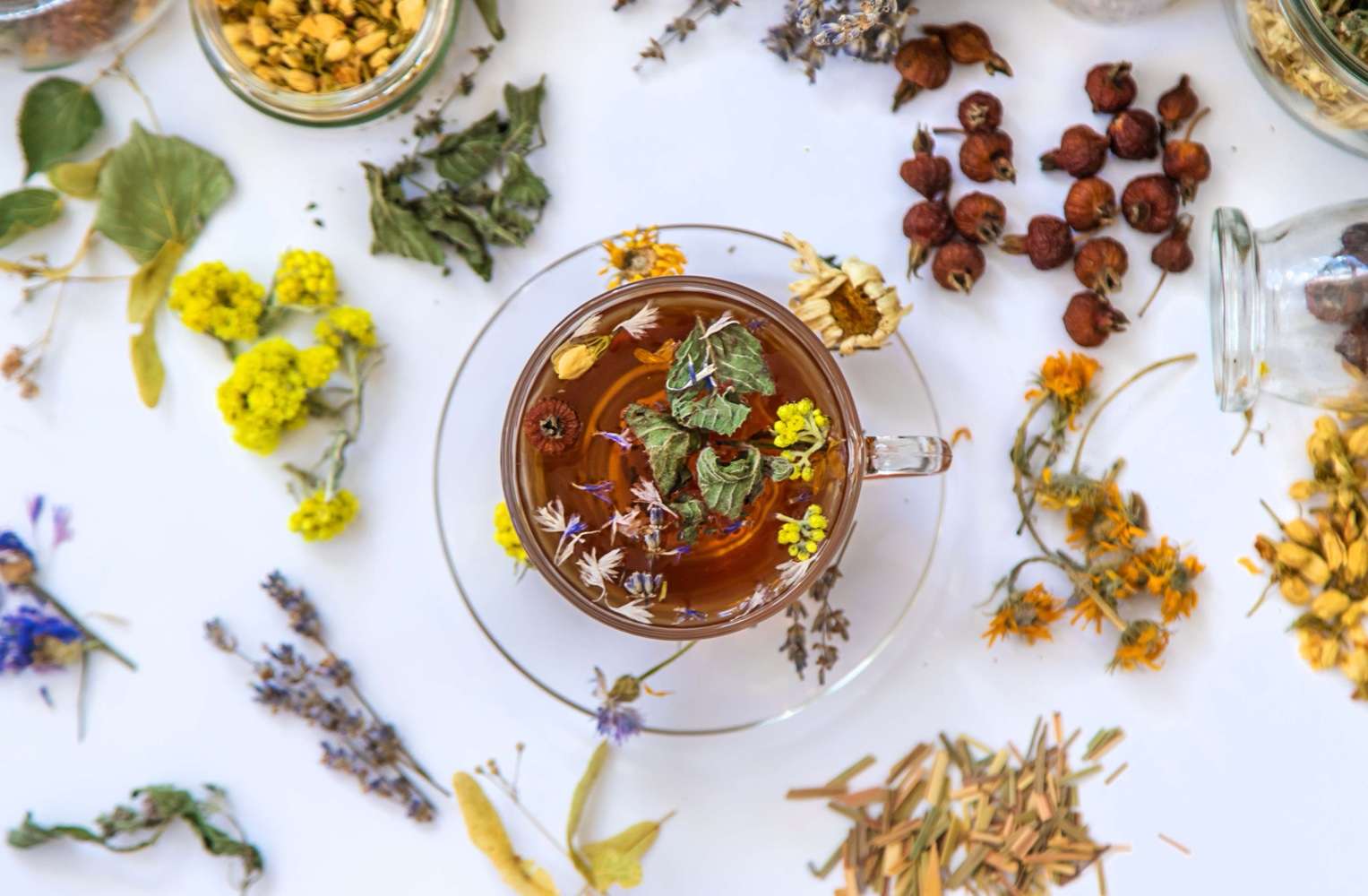
Functional Tea: A Guide to Ingredients, Benefits and How to Choose One
Tea has always been functional.
For centuries, people have steeped leaves, roots, flowers, bark, seeds and fruits not simply because they tasted good, but because different plants became part of daily rituals surrounding energy, digestion, relaxation, focus and general well-being.
Today, that ancient idea has a modern name: functional tea.
Walk through almost any tea aisle and you will find blends promising sleep, energy, calm, focus, detox, digestion, immunity and more. The wellness tea category has exploded.
But there is an important question hiding behind all of those promises:
What actually makes a tea functional?
The answer should begin with what is inside the cup.
Functional tea is at its most meaningful when it brings together real tea leaves and botanicals with intention — ingredients chosen not simply to create a flavor, but because each contributes something to the character, purpose or experience of the blend.
Understanding functional tea therefore requires looking beyond the name on the front of the package.
It requires turning it over.
What Is Functional Tea?
“Functional tea” is not a formal botanical classification like green tea, black tea or oolong tea. Nor is it a specific regulatory category established by the U.S. Food and Drug Administration.
Rather, it is a broad term commonly used for teas and botanical infusions formulated around a particular purpose or wellness experience.
A traditional tea might be selected primarily for its origin, processing method and flavor.
A functional blend asks another question:
What do we want this cup to do as part of someone’s daily ritual?
That might mean creating a blend designed around:
- Relaxation and an evening ritual
- Energy and alertness
- Digestion
- Focus
- Exercise and performance
- Skin and beauty rituals
- Everyday wellness
- Caffeine-free alternatives
- Metabolic wellness
The ingredients chosen for those blends may include true tea from Camellia sinensis alongside herbs, roots, flowers, berries, fruits and other botanicals.
That distinction matters because not everything we casually call “tea” actually comes from the tea plant.
Green tea, white tea, black tea and oolong all originate from Camellia sinensis. Chamomile, rooibos, peppermint, hibiscus and similar botanical beverages are technically herbal infusions or tisanes.
Functional blends often bring both worlds together.
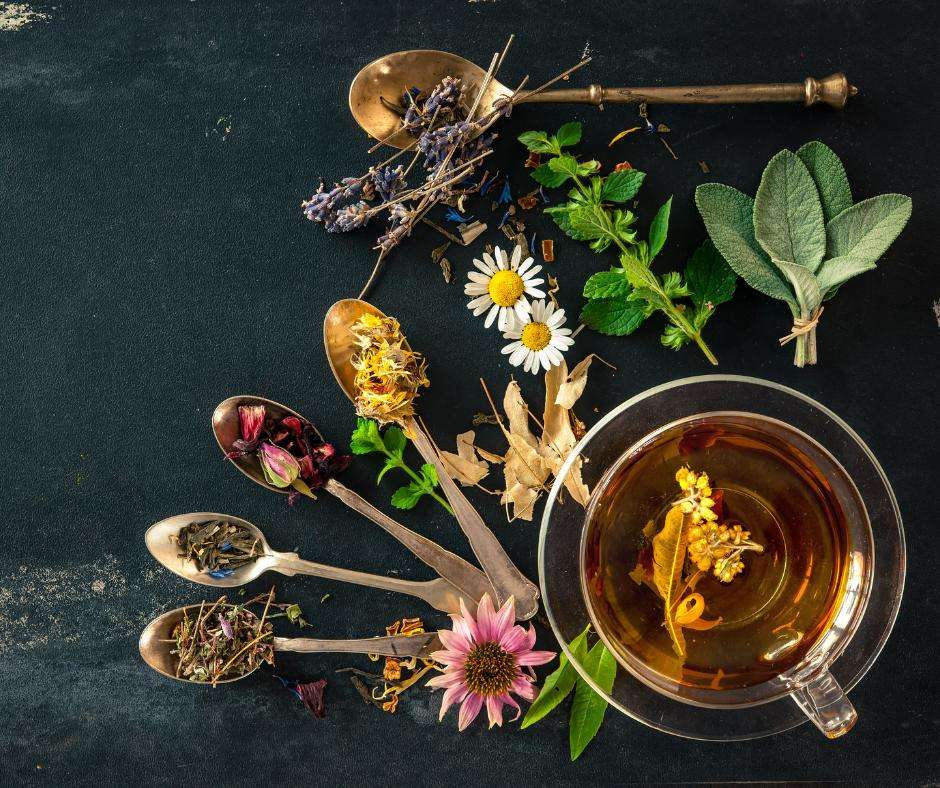
Functional Tea Starts With the Ingredient List
A beautiful package can tell you how a tea wants you to feel.
The ingredient panel tells you what you are actually drinking.
That makes the back of the package one of the most important places to begin when evaluating any wellness tea.
Suppose a blend is called a strawberry herbal tea.
There is a significant difference between a tea containing actual dried strawberry and one whose strawberry identity comes primarily from added flavoring.
The same principle applies to citrus, vanilla, berries, mint, flowers and spices.
A functional blend should invite questions such as:
What plants are actually present?
Can I identify them?
What role does each ingredient play?
Is the character of the tea coming from the ingredients themselves, or predominantly from added flavor?
Ingredient transparency becomes especially important in wellness-oriented products because the ingredient story is often a major reason the consumer chose the tea in the first place.
If a package celebrates plants, the ingredient list should tell you which plants are actually there.
Whole Botanicals, Extracts and Flavor Systems Are Not the Same Thing
Modern beverages can be built in very different ways.
Some are made from recognizable tea leaves, flowers, pieces of fruit, roots, herbs and spices.
Others incorporate powdered ingredients or botanical extracts.
Others depend heavily on flavor systems to create a particular aroma or taste.
These approaches are not interchangeable.
An extract, for example, may be intentionally manufactured to concentrate particular constituents. That can be useful in certain products, but it is fundamentally different from steeping pieces of the original plant.
Flavor ingredients serve another purpose: they create or reinforce flavor and aroma.
Whole botanicals provide yet another experience. They allow the drinker to see the ingredients, smell them as they steep and experience the changing character of multiple plants as they infuse into water.
None of this means that the word “whole” automatically makes a botanical clinically more effective.
It means the product philosophy is different.
For tea drinkers who value transparency, craftsmanship and the sensory experience of the plant itself, that distinction can matter enormously.
The Botanicals Behind Functional Tea
Part of what makes the functional tea category fascinating is the extraordinary range of plants that can find their way into a cup.
Some have been consumed for generations. Others have histories within traditional herbal practices. Some are now being investigated scientifically for particular biological effects.
Among the botanicals commonly found in modern functional blends are:
Ashwagandha
Ashwagandha has a long history in Ayurvedic tradition and has become one of the most recognizable botanicals in contemporary wellness. Modern research has explored preparations of ashwagandha in areas including stress and sleep, although results vary according to the preparation and more research is needed for many proposed uses.
Related article: Ashwagandha: Benefits, Uses & What the Science Says
Ginger Root
Few botanicals cross the line between culinary ingredient and traditional wellness ingredient as naturally as ginger. Its unmistakable warmth also makes it particularly valuable to tea formulators because it contributes both flavor and character.
Related article: Ginger Root: Benefits, Uses & What the Science Says
Chamomile
Chamomile is almost synonymous with evening tea. Its delicate floral character has made it part of relaxation rituals across cultures, although traditional reputation and clinical evidence should not be treated as the same thing.
Valerian Root
Valerian has a centuries-long history of traditional use associated with sleep and relaxation. Modern evidence for chronic insomnia remains inconsistent, an important example of why responsible wellness education should distinguish tradition from proven medical treatment.
Hibiscus
Deep crimson hibiscus brings tartness, vivid color and a naturally bright character to botanical infusions. Its sensory contribution alone demonstrates an important principle of functional formulation: an ingredient can contribute to the experience of a blend in more than one way.
Rooibos
Naturally caffeine-free rooibos provides a smooth, rounded base that works particularly well in functional herbal formulations where traditional tea caffeine is not desired.
Yerba Mate
Yerba mate naturally contains caffeine and has a long cultural history in South America. In contemporary blends, it can provide both botanical complexity and natural stimulation without requiring tea from Camellia sinensis.
Milk Thistle
Milk thistle is one of the best examples of the need for careful language around botanicals. It has a long history of traditional use and is frequently marketed for liver-related purposes, yet high-quality evidence does not currently support sweeping conclusions about its ability to treat liver conditions.
That does not make the plant uninteresting.
It makes accuracy important.
Turmeric
Turmeric has traveled from culinary tradition to global wellness culture. Its brilliant color, earthy character and naturally occurring compounds have made it the subject of extensive scientific interest.
Ginkgo Biloba
Ginkgo is one of the world’s most recognizable botanicals associated with cognitive wellness and is frequently incorporated into formulations designed around focus and mental performance.
Schisandra Berry
Used historically in traditional Chinese practices, schisandra brings an unusually complex flavor profile and has increasingly appeared in modern botanical and performance formulations.
These plants represent only a small part of the botanical world.
Explore the Pure & Easy Tea Ingredient Library
The Most Important Ingredient May Be the Formulation
It is easy to fall in love with a hero ingredient.
Ashwagandha.
Ginger.
Turmeric.
Ginkgo.
Hibiscus.
Milk thistle.
But a thoughtful functional tea is more than a collection of fashionable botanicals.
Formulation matters.
Imagine placing ten individually impressive musicians in the same room. That does not automatically create an orchestra.
Someone still has to compose the music.
Tea blending works the same way.
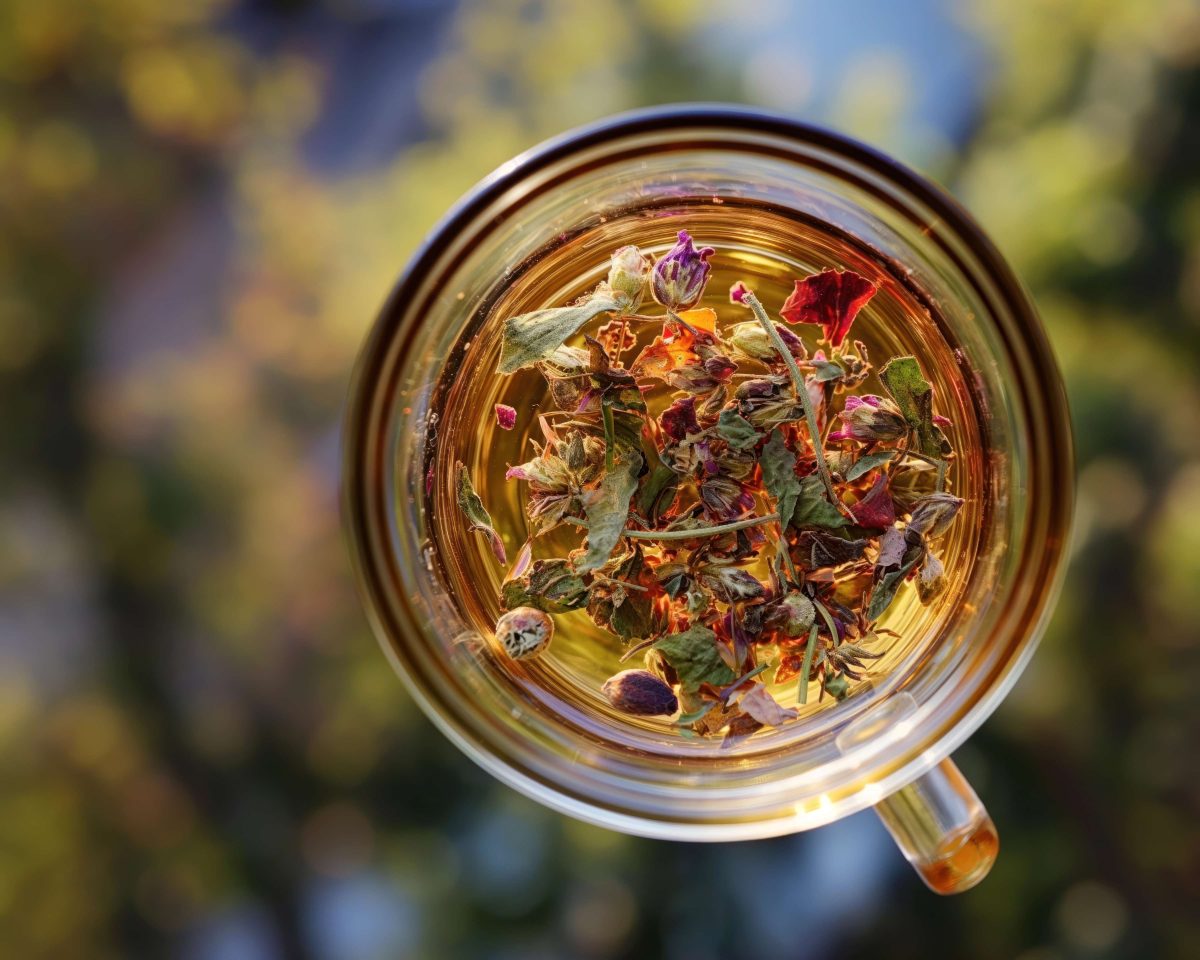
One ingredient may establish the base. Another provides brightness. Another creates depth. A root might add earthiness while a flower softens it. A fruit peel may lift the aroma. A caffeinated botanical may determine when the blend is best consumed.
Each ingredient also competes for space in a finite cup.
More ingredients do not automatically create a better tea.
The challenge is creating harmony.
A sophisticated functional blend therefore considers:
- Purpose
- Ingredient compatibility
- Flavor
- Aroma
- Caffeine
- Botanical character
- Brewing temperature
- Steeping time
- Serving size
- The experience of drinking the finished tea
The goal should not be to assemble the longest ingredient list.
It should be to create a cup in which every ingredient has a reason to be there.
Tradition Is Not the Same as Proof
This may be the most important distinction in the entire functional tea conversation.
Botanicals can have fascinating traditional histories without having definitive clinical evidence for every modern claim made about them.
Those are two different kinds of information.
Chamomile, valerian, milk thistle, ashwagandha and numerous other plants have histories of traditional use. Researchers continue to study many of them. Some areas show promising evidence. Others remain uncertain, inconsistent or understudied.
Responsible brands should be comfortable saying so.
The FDA also distinguishes between different kinds of claims made about foods and dietary supplements. A statement about supporting the normal structure or function of the body is different from claiming that a product diagnoses, treats, cures or prevents a disease.
Tea should not have to pretend to be medicine to have value.
There is plenty to celebrate in the ritual, flavor, provenance, craftsmanship and botanical diversity of a remarkable cup without promising outcomes that science has not established.
Functional Tea Is Not a Replacement for Medical Care
Another important distinction is what functional tea is not.
A botanical infusion should not be treated as a substitute for appropriate medical diagnosis or treatment.
People taking medications, managing health conditions, preparing for surgery, or who are pregnant or breastfeeding may also need to pay particular attention to herbal ingredients.
“Natural” does not automatically mean appropriate for every person.
Botanicals can contain biologically active compounds. Some herbs may interact with medications or may not be recommended for certain individuals.
That is not a reason to fear plants.
It is a reason to respect them.
When there is uncertainty, discussing regular herbal consumption with a qualified healthcare professional is a sensible part of an informed wellness routine.
How to Read a Functional Tea Label
The next time you encounter a tea promising calm, focus, energy, beauty or wellness, ignore the front of the package for a moment.
Turn it around.
Then ask:
1. What are the actual ingredients?
Look beyond imagery and marketing language.
If the package celebrates berries, flowers, herbs or roots, see whether those botanicals actually appear in the ingredient list.
2. Are the ingredients clearly identified?
Transparency matters.
An ingredient panel should help you understand what you are consuming rather than make the formulation more mysterious.
3. Are flavorings doing the work of real ingredients?
Added flavor is common throughout the beverage industry.
That is not the same experience as obtaining flavor directly from tea leaves, herbs, flowers, roots, spices and pieces of fruit.
Internal link: What’s Really in Your Tea? The Truth About Flavorings, Fillers and What You Deserve Instead
4. Is caffeine clearly communicated?
A tea designed for energy may make perfect sense in the morning and very little sense before bed.
Green tea, black tea, yerba mate and guarana, for example, can contribute caffeine. Chamomile and rooibos naturally do not.
A functional product should make this easy for the consumer to understand.
5. Are the claims believable?
Be cautious when a beverage sounds more like a pharmaceutical advertisement than a tea.
Words such as “cure,” “treat” and “prevent” should immediately change how critically you evaluate the claim.
6. Are brewing instructions provided?
Water is the final ingredient in every cup of tea.
Temperature, tea quantity and steeping time affect what ultimately ends up in the cup.
A carefully formulated blend deserves equally careful preparation.
Brewing Is Part of the Formulation
A functional tea does not end when the ingredients go into the package.
It ends when the infusion reaches your cup.
Water temperature affects extraction.
Steeping time affects intensity.
Quantity affects concentration.
Different botanicals respond differently to hot water.
Delicate green teas often call for lower temperatures than black teas. Dense roots and robust herbal ingredients may benefit from longer infusion times.
This is one reason a universal “steep everything for three minutes” approach makes little sense for complex botanical blends.
A formula containing tea leaves, bark, roots, berries and flowers may require a completely different brewing strategy from a simple green tea.
The brewing instructions should therefore be considered part of the blend itself rather than an afterthought.
How to Choose a Functional Tea
Instead of beginning with a product, begin with the experience you want.
For an evening ritual
Look for caffeine-free formulations built around botanicals traditionally associated with relaxation, such as chamomile, lemon balm, passionflower or valerian.
For focus and alertness
Consider blends containing naturally caffeinated ingredients such as tea or yerba mate alongside botanicals traditionally associated with mental performance.
For digestion after meals
Ginger, fennel, peppermint and other botanicals have long histories in culinary and digestive traditions.
For performance and activity
Look at the entire formula, including caffeine content, serving size and when the tea is intended to be consumed.
For everyday wellness
There may not need to be a dramatic promise at all.
Sometimes the most functional thing about tea is that it replaces a heavily sweetened beverage with an unsweetened ritual built around plants, water and a few quiet minutes.
That is a function worth appreciating.
A Better Definition of Functional Tea
Perhaps the industry needs a simpler definition.
Functional tea should not mean:
A tea with the biggest wellness promise.
It should mean:
A tea formulated with purpose.
Purpose in the ingredients.
Purpose in the composition.
Purpose in the brewing.
Purpose in the moment when you drink it.
The best functional blends do not need to hide behind exaggerated claims because the ingredients themselves tell the story.
You should be able to open the package and see leaves.
Roots.
Flowers.
Fruit.
Herbs.
Botanicals with names, histories, origins, flavors and reasons for being there.
That brings functional tea remarkably close to where tea began in the first place:
plants meeting water with intention.
The Pure & Easy Tea Approach
At Pure & Easy Tea, we believe the future of tea begins by returning to something very old.
Real ingredients.
Every blend begins with actual tea leaves and botanicals — roots, flowers, fruits, herbs, berries and spices chosen for the role they play within the composition.
No ingredient should need to hide behind a vague flavor.
No flavoring should need to impersonate the ingredient pictured on the package.
And no wellness promise should be more important than the integrity of what is actually inside the cup.
That philosophy is why we created an Ingredient Library revealing the botanicals behind our blends and why our Wellness and Performance Collections are formulated around specific drinking experiences rather than a single fashionable ingredient.
We believe transparency is part of quality.
Because when you can see the ingredients, understand their purpose and experience them unfolding in hot water, tea becomes more than something you consume.
It becomes a ritual you understand.
Tea as it was meant to be.
Functional Tea FAQ
What is functional tea?
Functional tea is a broad term for tea or botanical infusions formulated around a particular purpose or wellness experience, such as relaxation, energy, digestion, focus or general well-being. It is not a formal FDA-defined category of tea.
Is functional tea the same as herbal tea?
Not necessarily. Herbal teas are infusions made from botanicals other than the traditional tea plant, Camellia sinensis. Functional teas may be completely herbal or may combine botanicals with green tea, black tea, white tea, oolong or other traditional teas.
Does functional tea contain caffeine?
Some does and some does not. Traditional teas made from Camellia sinensis naturally contain caffeine, as do botanicals such as yerba mate and guarana. Ingredients such as rooibos and chamomile are naturally caffeine-free. Always check the specific blend.
Can functional tea be consumed every day?
That depends on the ingredients, amount consumed and the individual. Many teas and culinary botanicals are regularly consumed as part of normal diets, while other herbs may have precautions, potential medication interactions or limited information regarding long-term use. Review the ingredients and speak with a healthcare professional when appropriate.
Are whole botanicals better than extracts?
They are different. Extracts may intentionally concentrate certain botanical constituents, while whole botanicals preserve more of the plant’s original sensory character and allow the drinker to see and experience the ingredients being steeped. “Whole” alone does not establish greater medical effectiveness.
What should I look for in a wellness tea?
Start with ingredient transparency. Look for clearly identified botanicals, understandable caffeine information, sensible brewing instructions and claims that do not promise to diagnose, treat, cure or prevent disease.
Do functional teas have scientifically proven benefits?
Evidence varies substantially by ingredient, preparation, dose and proposed benefit. Some botanicals have been studied extensively, while evidence for others remains limited or inconsistent. Traditional use should not automatically be interpreted as clinical proof.
What makes a functional tea high quality?
Ingredient quality is only one factor. A well-designed functional tea should also consider formulation, flavor, aroma, ingredient compatibility, caffeine level, serving size and brewing method. The ingredients should work together rather than simply create an impressive-looking label.
This article is for educational purposes and is not intended as medical advice. Botanical ingredients may interact with medications or may not be appropriate for everyone. Consult a qualified healthcare professional regarding individual health concerns or regular use of herbal products.
Pure & Easy Minute
Watch the 60-second version of this article
Keep reading