
Loose Leaf Tea vs. Tea Bags
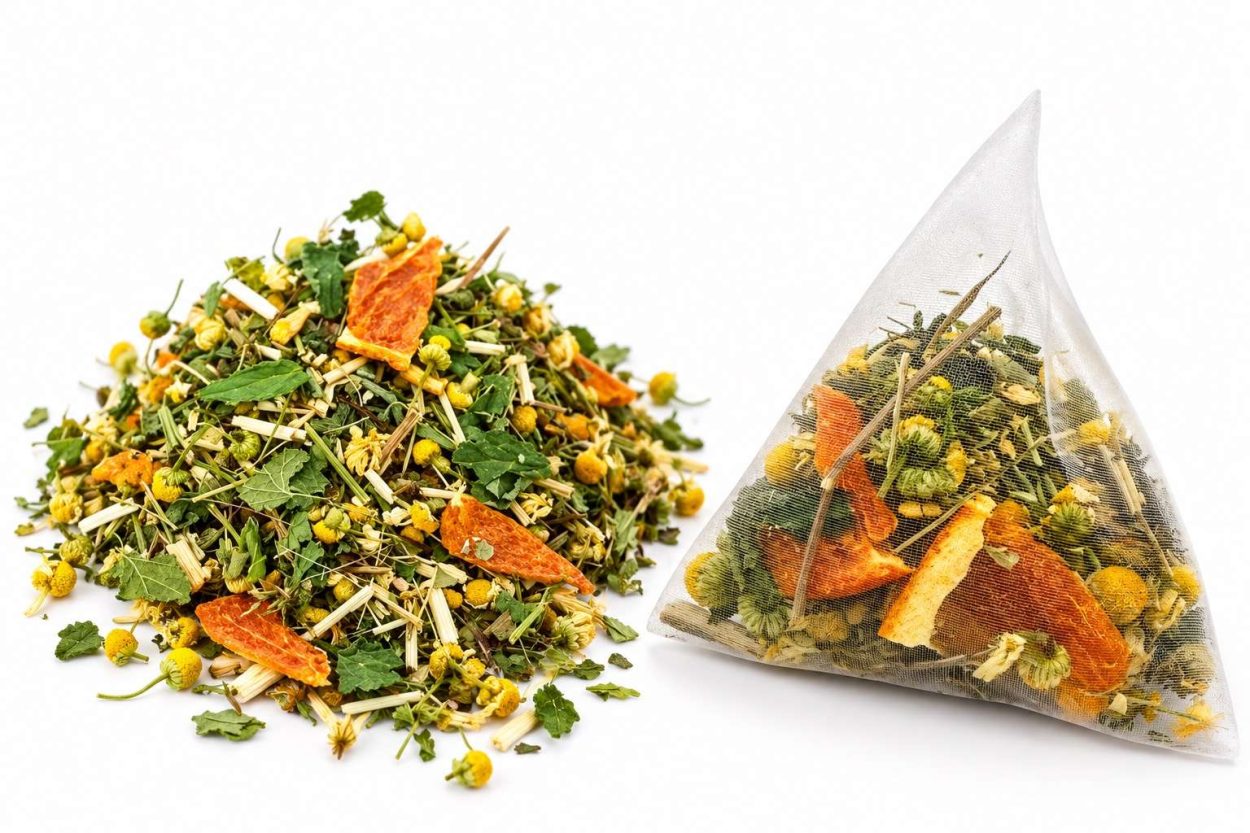
A tea bag makes brewing easy. Loose leaf makes the ingredients easy to see. But neither tells you, on its own, how much care went into the tea.
That care begins long before the water heats: with the ingredients selected, how they are processed and stored, the balance of the blend, and the amount you are given to brew. If the tea comes in a sachet, it extends to the material and construction of the bag itself.
When comparing loose leaf tea vs. tea bags, those are the details worth looking at. Convenience is easy to recognize. Quality deserves a closer look.
Loose Leaf and Tea Bags Describe Formats, Not Quality Grades
Loose leaf tea is brewed outside a disposable bag, usually in an infuser, strainer, or brewing vessel with a built-in filter. Tea bags contain a measured portion for convenient brewing.
Either format can hold carefully sourced tea. Either can also hold a blend that falls short of your expectations.
A pouch labeled “loose leaf” does not tell you whether the ingredients are fresh, skillfully processed, or thoughtfully blended. A pyramid sachet does not establish those things either.
Start with what you are actually brewing. What ingredients are listed? What can you recognize? Where do the aroma and taste come from? How much tea is intended for your cup?
Those questions reveal more than the package shape.
Whole Leaves, Fannings, and Dust: Why Size Matters
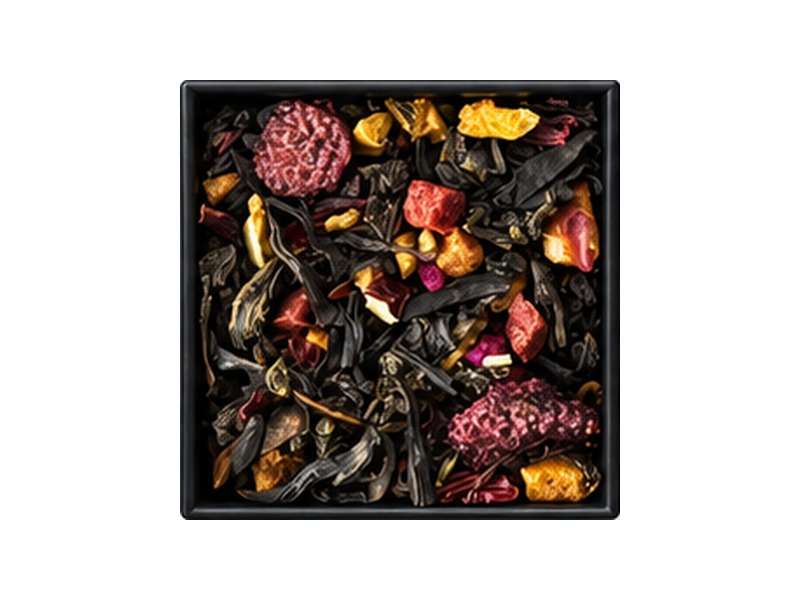
Tea can be processed into many shapes and sizes, from intact or rolled leaves to small fragments. Fannings and dust are terms used for smaller particle grades; they are not a complete assessment of flavor or craftsmanship.
Many everyday tea bags use finely divided tea because it brews quickly. Research on tea infusion shows that smaller particles can extract faster, and that the amount of space available inside a bag also affects brewing.[1]
That helps explain why a cup can darken quickly without necessarily delivering the experience you wanted. Color alone cannot tell you how fresh, balanced, or satisfying a tea will be.
Larger leaves and recognizable botanicals offer a different experience. You can inspect them before brewing and watch them open and hydrate in the water. With a botanical blend, visible pieces of flowers, roots, fruit, and herbs also help connect the ingredient list to what is in your cup.
Still, bigger is not automatically better. The right cut depends on the ingredient and the intended brew. What matters is whether each ingredient has been prepared with purpose, rather than treating every blend as something that should turn the water brown as quickly as possible.
Read Beyond the Flavor Name
A blend called “peach,” “vanilla,” or “berry” tells you what to expect from its taste. Read the ingredient list to understand how that taste is created.
Real fruit, spices, flowers, and herbs can contribute their own aroma and character. Added natural or artificial flavorings offer another route. Both loose leaf teas and bagged teas can contain them.
At Pure & Easy Tea, we believe premium tea should get its aroma and taste entirely from the ingredients themselves. We never add natural or artificial flavorings.
That standard requires thoughtful formulation. Every botanical has to earn its place, and the balance has to work in the brewed cup. The ingredients themselves carry the experience.
Whether you choose a pouch or a sachet, that is the standard we want you to taste.
A Quality Tea Bag Deserves Its Own Inspection
The bag is part of the brewing experience. Look at its fill, its construction, and its material.
Enough tea—and enough room
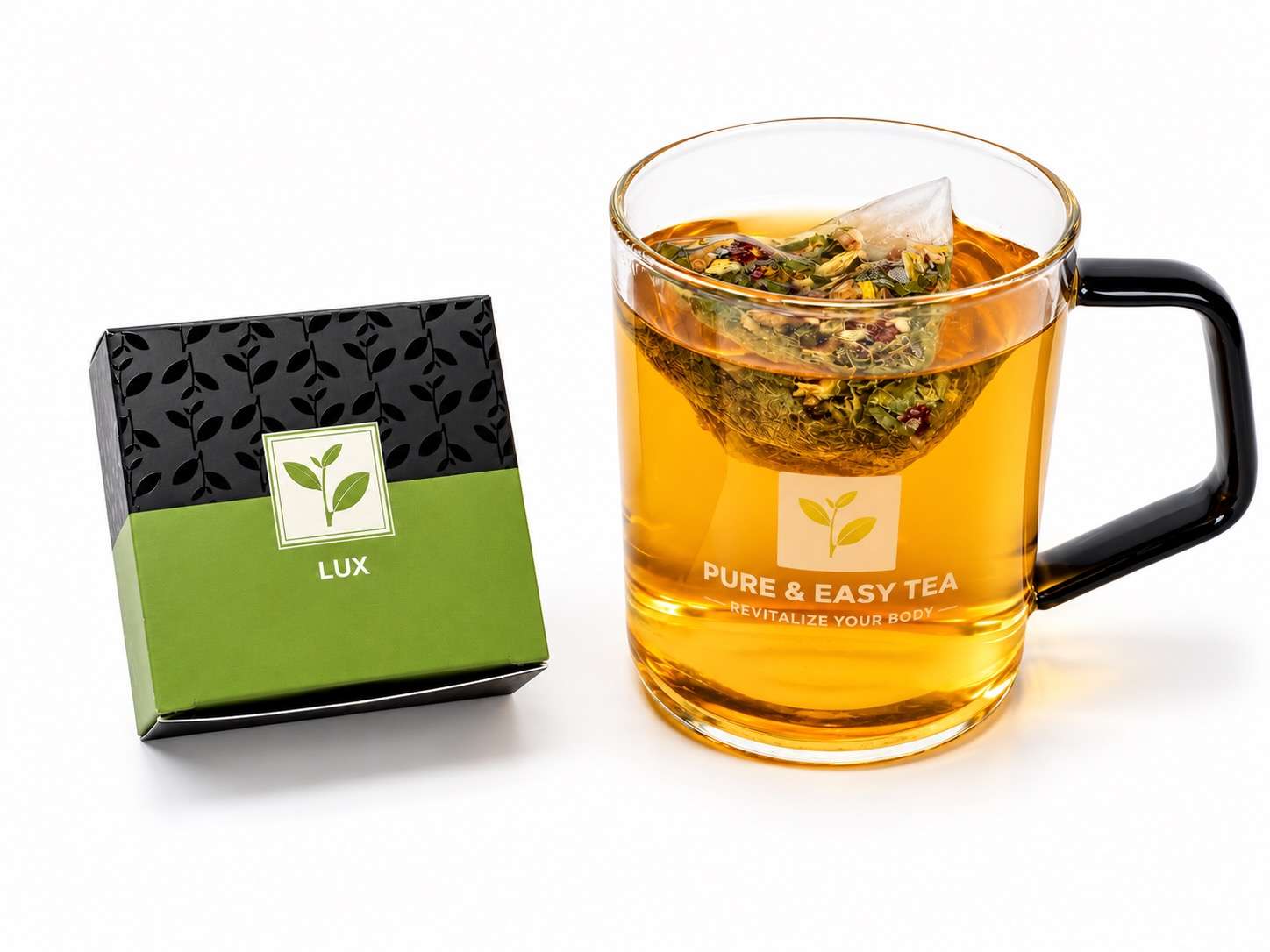
A thoughtfully filled sachet should contain a portion appropriate for the recommended cup size, while allowing the ingredients room to hydrate and expand. More tea is useful only when the bag and brewing instructions accommodate it.
A pyramid shape can provide that space, but the shape alone is no guarantee. The balance between bag size, ingredient size, and fill matters. Research on bagged tea has found that crowding can affect swelling and infusion.[1]
Look for a disclosed serving weight and clear brewing directions. A large mug needs a recipe suited to its volume; counting bags alone is not enough.
Know what the bag is made from
Appearance is not a reliable material guide. A silky-looking mesh or a paper-looking bag does not, by itself, tell you its full composition.
Look for a clear material disclosure. If you want to avoid conventional plastic mesh, look to avoid PET—polyethylene terephthalate—and check for nylon as well.
A widely cited 2019 study reported microplastic and nanoplastic release from the nylon and PET tea bags it tested in hot water.[2] Those findings concern the tested products and conditions; they should not be treated as a measurement of every tea bag on the market.
Pure & Easy Tea uses PLA sachets. PLA, or polylactic acid, is a plant-derived polymer. For example, the manufacturer of SOILON mesh describes making its PLA fibers from plant starch through fermentation and polymerization.[3]
PLA differs from PET, but “plant-derived” does not mean it is not a plastic. Nor does that description alone establish zero particle release during brewing. Material selection and testing of the finished bag are separate questions.
Disposal claims deserve the same clarity. SOILON’s manufacturer identifies industrial compostability certifications for its mesh.[3] Industrial compostability requires specific conditions and does not mean a bag will readily break down in a backyard compost pile. Follow the finished product’s disposal guidance and check what your local facility accepts.
The practical lesson is simple: know what surrounds your tea as well as what is inside it.
Why We Recommend Loose Leaf First
Loose leaf gives you control over the amount of tea, the brewing space, and the vessel you use. It also removes the disposable bag from the steeping process.
For us, that visibility is part of the pleasure. You see the blend before brewing, watch the ingredients unfold, and experience the aroma as the cup develops.
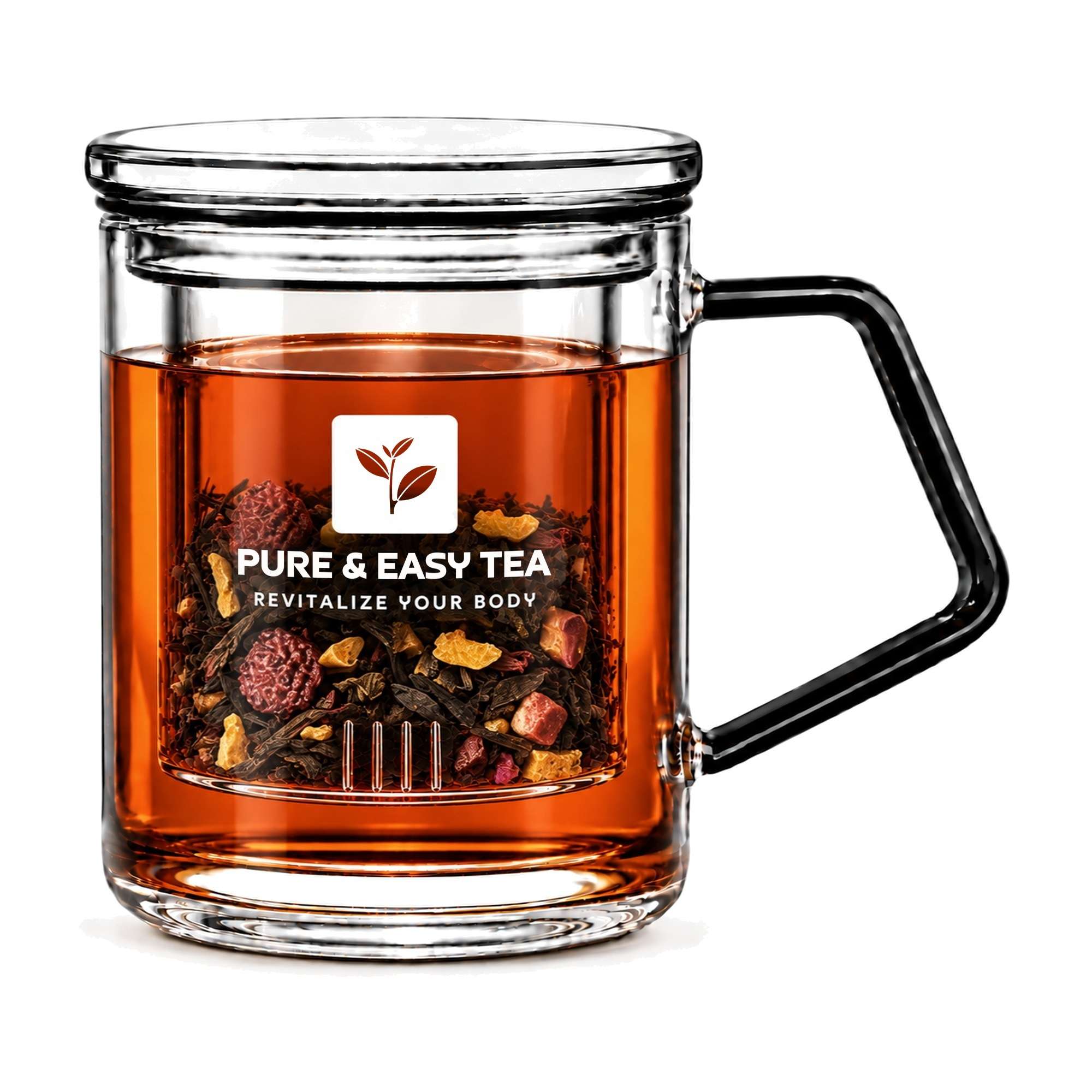
Our borosilicate glass brewing mug makes that experience easy to enjoy. It lets the ingredients remain visible while its filter separates them from the tea you drink.
Loose leaf also lets you adjust the portion to your mug and your preferences. Start with the blend’s instructions, then refine the brew to find the cup you look forward to.
Why Thoughtful Sachets Still Have a Place
There are times when a measured sachet makes tea easier to enjoy: at work, while traveling, when serving guests, or when exploring several blends in a tea flight.
Convenience can be thoughtfully designed. At Pure & Easy Tea, our sachets are a way to make our botanical blends accessible in more settings, with the same commitment to ingredients that create their own aroma and taste.
Our tea flights extend that intention to the collection itself. Each selection is curated to offer a particular experience—from uplifting Ascent to calming Serenity and the green tea exploration of Verdant.
The format should serve the tea and the person drinking it. Both deserve care.
Prefer the One-Minute Version?
Watch Episode 9 of The Pure & Easy Minute: Is Loose Leaf Really Better?
See all Pure & Easy Minute episodes »
Choose the Cup You Will Look Forward To
When choosing between loose leaf and tea bags, look beyond convenience and presentation. Read the ingredients. Consider the portion. Check the bag material. Follow brewing instructions that suit the blend and your cup.
Choose loose leaf when you want greater control and a view of the ingredients as they steep. Choose a thoughtfully made sachet when a measured, convenient serving fits your day.
At Pure & Easy Tea, every choice begins with the same intention: exceptional ingredients, purposeful formulation, and aroma and taste that come entirely from what we put into the blend.
A better cup begins with care. You should be able to see it in the ingredients and taste it in the tea.
Explore Pure & Easy Tea · Discover Our Gifts and Tea Flights
References
1. “Swelling and infusion of tea in tea bags.” Journal of Food Science and Technology (2017).
https://pmc.ncbi.nlm.nih.gov/articles/PMC5502043/
2. Hernandez et al. “Plastic Teabags Release Billions of Microparticles and Nanoparticles into Tea.” Environmental Science & Technology (2019).
https://pubs.acs.org/doi/10.1021/acs.est.9b02540
3. Yamanaka Industry. “TEAROAD SOILON: Woven Mesh Filter.” Manufacturer material description and industrial compostability information.
https://teabagfilter.com/products/mesh_filter/soilon.html
Keep reading