
Who Grades Your Tea, and What Does the Grade Really Mean?
Tea grades can tell you a great deal about the leaves. They don’t necessarily tell you how good a tea will taste.
A package of tea can carry an impressive collection of letters. OP. BOP. FTGFOP. To someone browsing a shelf, they can look like credentials: evidence that a tea has been evaluated, ranked and awarded its place.
But what, exactly, was being measured?
Was it the size of the leaves? The presence of buds? The appearance of the finished tea? Or how good it actually tastes?
Understanding tea grades begins with an important distinction: a classification can describe a tea without fully measuring its quality.
There is no single worldwide grading system that places every black tea, green tea, oolong, matcha and botanical blend on the same quality scale. Different traditions use different terminology, and the meaning of a grade depends on the system behind it.
For anyone who appreciates premium tea, that makes understanding the label more useful than simply being impressed by it.
Who Actually Grades Tea?
Depending on the origin and type of tea, classifications may be assigned during production, sorting or commercial evaluation. Producers, buyers and professional tasters can assess different aspects of the same tea.
A factory might sort processed leaves into consistent sizes. A buyer might evaluate aroma, body and finish. A competition might judge entries against its own criteria.
Those activities all provide information, but they answer different questions.
A leaf-size grade describes the material being sold. A tasting assessment evaluates the brewed experience. An award reflects performance within a particular competition. None automatically substitutes for the others.
Before treating a designation as proof of excellence, ask: Who assigned it, what did they assess and what does it actually guarantee?
What Traditional Black Tea Grades Tell You
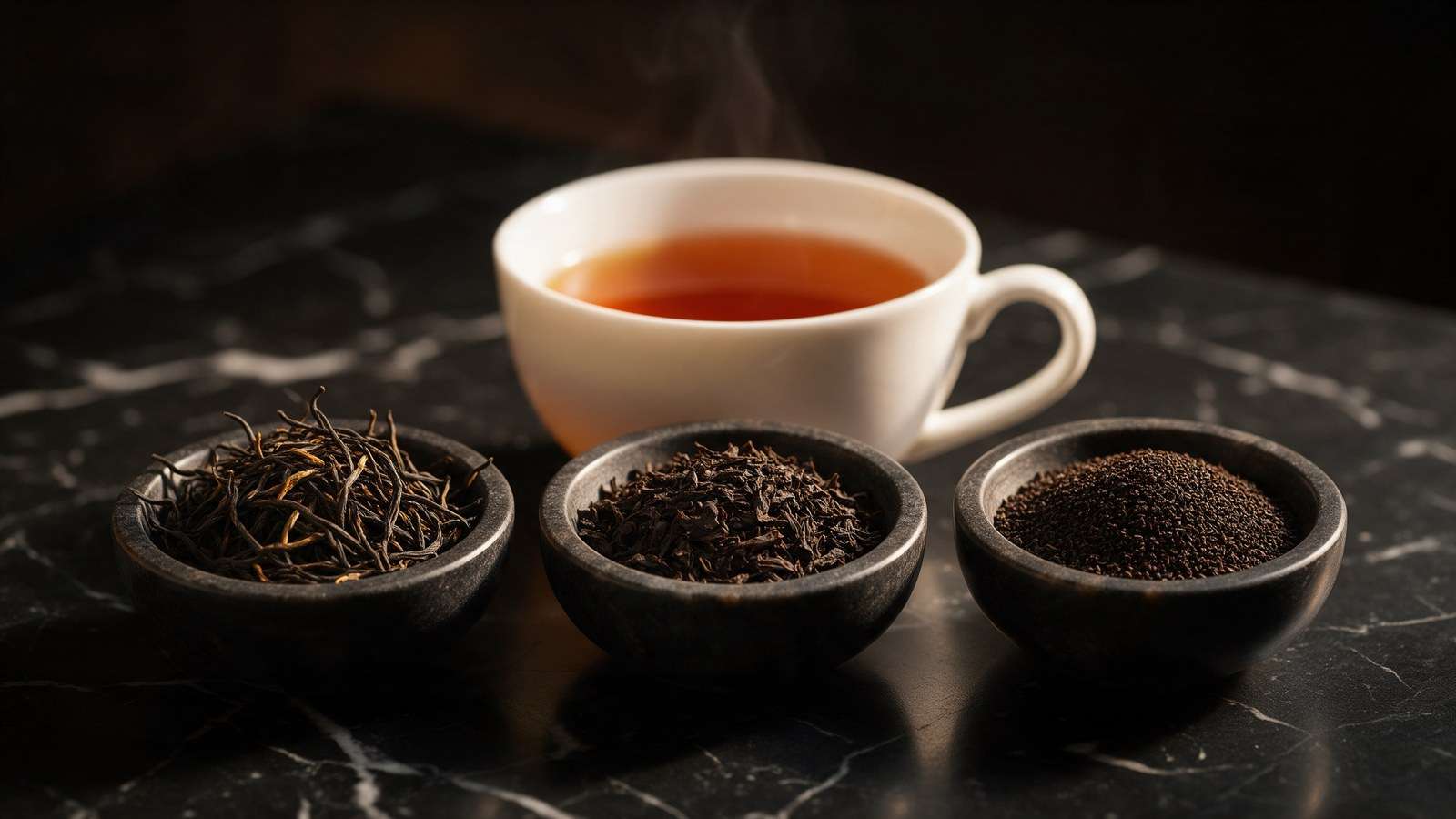
Many familiar black tea grades belong to systems used in producing regions such as India and Sri Lanka. They commonly describe the physical characteristics of the processed leaf.
Sorting separates tea into categories such as whole leaf, broken leaf and finer particles. This helps producers and buyers work with more consistent material.
Here are several terms you may encounter:
| Term | General meaning | What it does not establish by itself |
|---|---|---|
| Orange Pekoe (OP) | A traditional whole-leaf black tea classification | Orange flavor or a universal quality score |
| Broken Orange Pekoe (BOP) | A broken-leaf black tea classification | Poor quality simply because the leaf is smaller |
| Flowery Orange Pekoe (FOP) | A designation associated with leaf appearance and the presence of tips or buds | Added flowers or floral flavorings |
| Fannings | Small leaf particles separated during sorting | The complete quality of the source tea |
| Dust | Very fine tea particles | Whether a particular drinker will enjoy the resulting cup |
Specific definitions and conventions vary. Treat this table as an introduction rather than a universal grading chart.
The practical lesson is straightforward: a grade can help identify the style of leaf you are buying, but it cannot tell the entire story of the cup.
Orange Pekoe Does Not Mean Orange-Flavored Tea
This is one of tea’s most persistent points of confusion.
Orange Pekoe is a grading term. The word “orange” does not mean that orange fruit, peel or flavoring has been added.
Likewise, “flowery” in a traditional grade does not necessarily mean that flowers are present in the blend.
This distinction matters because grading language and ingredient language serve different purposes. To know what is actually in a tea, read the ingredient list.
A tea’s name may describe its origin, grade, style or intended experience. Its ingredient list should tell you what you are drinking.
Are Whole Leaves Always Better Than Broken Leaves?
Whole leaves are an important part of the tea experience we value at Pure & Easy Tea. They offer an opportunity to see the leaf, appreciate its structure and watch it unfold.
But saying that every whole-leaf tea is better than every broken-leaf tea would oversimplify the subject.
Broken leaves can come from well-grown, carefully processed tea. Larger leaves can still be poorly handled or disappointing in the cup.
Leaf size also affects preparation. Smaller particles generally extract more quickly, while larger leaves may call for a different balance of time, temperature and water.
The right comparison is not simply “large versus small.” It is whether the material, processing and brewing method work together to deliver the intended experience.
For more on that distinction, explore our article on loose-leaf tea versus tea bags, or our guide to how long to steep tea.
Green Tea, Oolong and Matcha Need Their Own Context
The black tea terminology above should not be treated as a universal language for every tea.
Other categories have their own production traditions, styles and quality descriptions. A designation meaningful within one region or tea type may tell you little about another.
Matcha offers a useful example.
“Ceremonial grade” is widely used in marketing, but it should not be mistaken for a universally administered quality certification. Japanese tea producer Ippodo explains that it does not use the term, describing it as language developed to market matcha overseas.
That does not mean excellent matcha is difficult to recognize. It means the useful questions go beyond the phrase on the tin: where it comes from, how it was produced, how fresh it is and how it performs in the preparation you enjoy.
A meaningful explanation is more valuable than an unexplained adjective.
What About Herbal and Botanical Blends?
A blend containing rooibos, ginger, flowers, fruit and roots cannot be meaningfully evaluated using a black tea leaf-size code alone.
The challenge becomes broader.
Are the ingredients clearly identified? Do they contribute recognizable character? Are their proportions thoughtful? Do the aromas and tastes work together? Does the preparation allow the blend to express itself?
A long ingredient list does not automatically demonstrate craftsmanship. Neither does a short one.
Craftsmanship lies in the choices: what belongs in the blend, why it belongs there and how the ingredients come together in the finished cup.
That is especially relevant when evaluating complex botanical formulations. You are assessing both the individual ingredients and the judgment behind their combination.
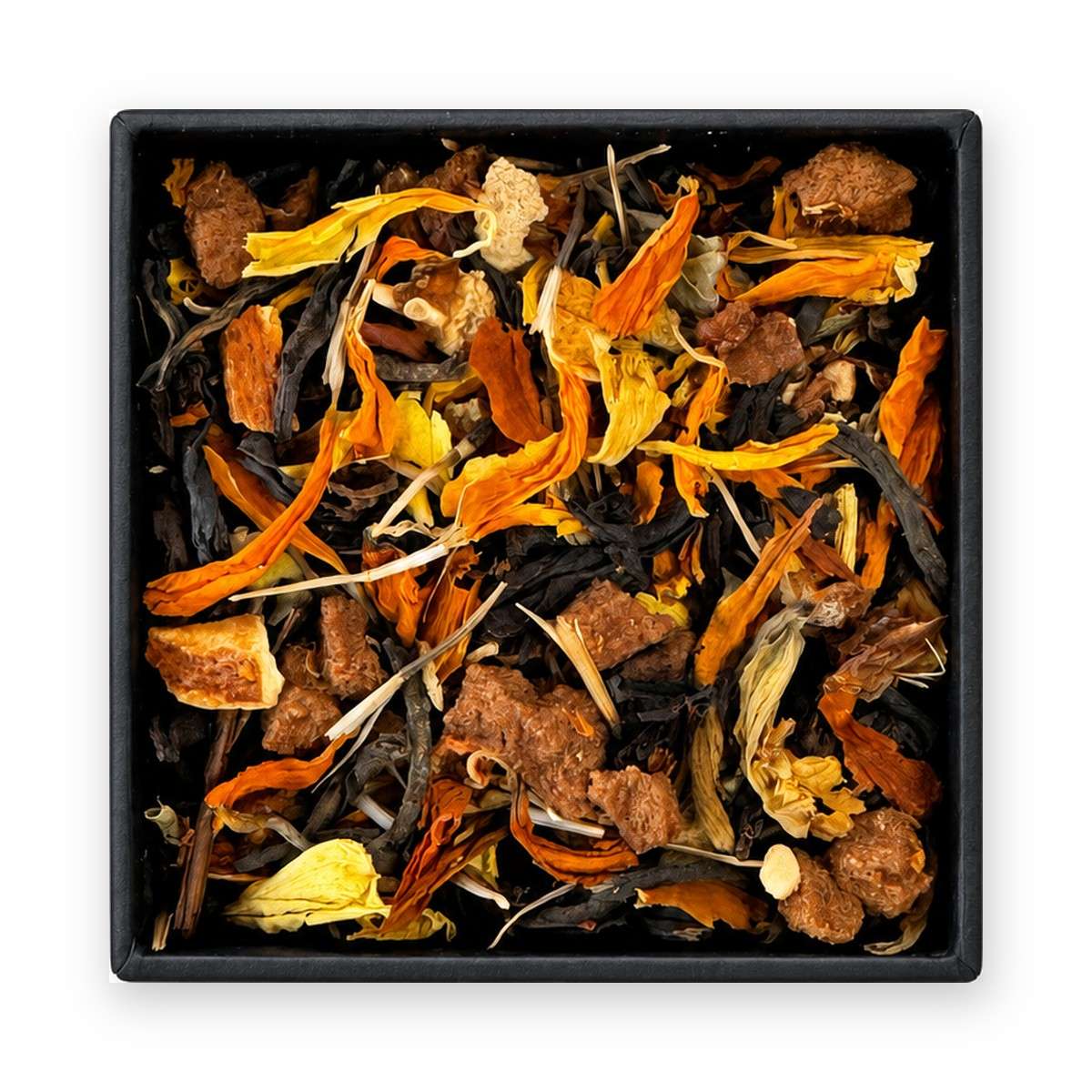
Sunday Morning: black tea with guava, strawberry, orange and marigold, whole ingredients you can see.
Six Things to Consider Beyond the Grade
1. Ingredient transparency
Start with the full ingredient list.
Distinguish between a blend made from identifiable botanicals and one that also contains added flavorings. Neither an impressive grade nor attractive packaging answers that question for you.
2. Sourcing information
Specific information about origin, harvest or processing can help you understand a tea’s intended character.
Not every blend requires a detailed estate history. But the information provided should be clear, relevant and consistent with the product.
3. Freshness and storage
A well-made tea still needs suitable packaging and handling.
Tamil Nadu Agricultural University’s tea-processing guidance identifies moisture control and proper storage as important to maintaining keeping quality. A prestigious designation cannot compensate for tea that has been poorly stored.
4. Aroma and taste
Brew according to the tea’s instructions before judging it.
Notice whether its character feels clear and balanced. Does the aroma invite another sip? Does the finish remain pleasant? Does the cup deliver the experience the description led you to expect?
Intensity alone is not the same as complexity.
5. Formulation
For a blend, consider how the ingredients work together.
A forceful ingredient can dominate a cup. Thoughtful formulation gives the overall experience direction, allowing different ingredients to contribute without making the result feel confused.
6. Evidence behind the claims
When a company uses words such as “premium,” “artisan” or “highest grade,” look for an explanation.
What makes the product distinctive? What information can the company provide about its ingredients, preparation or quality controls?
A useful claim should lead to something you can understand, verify or experience. For a closer look, see what actually makes a tea premium.
What Quality Means at Pure & Easy Tea
At Pure & Easy Tea, we believe quality should be evident in the blend and in the experience of drinking it.
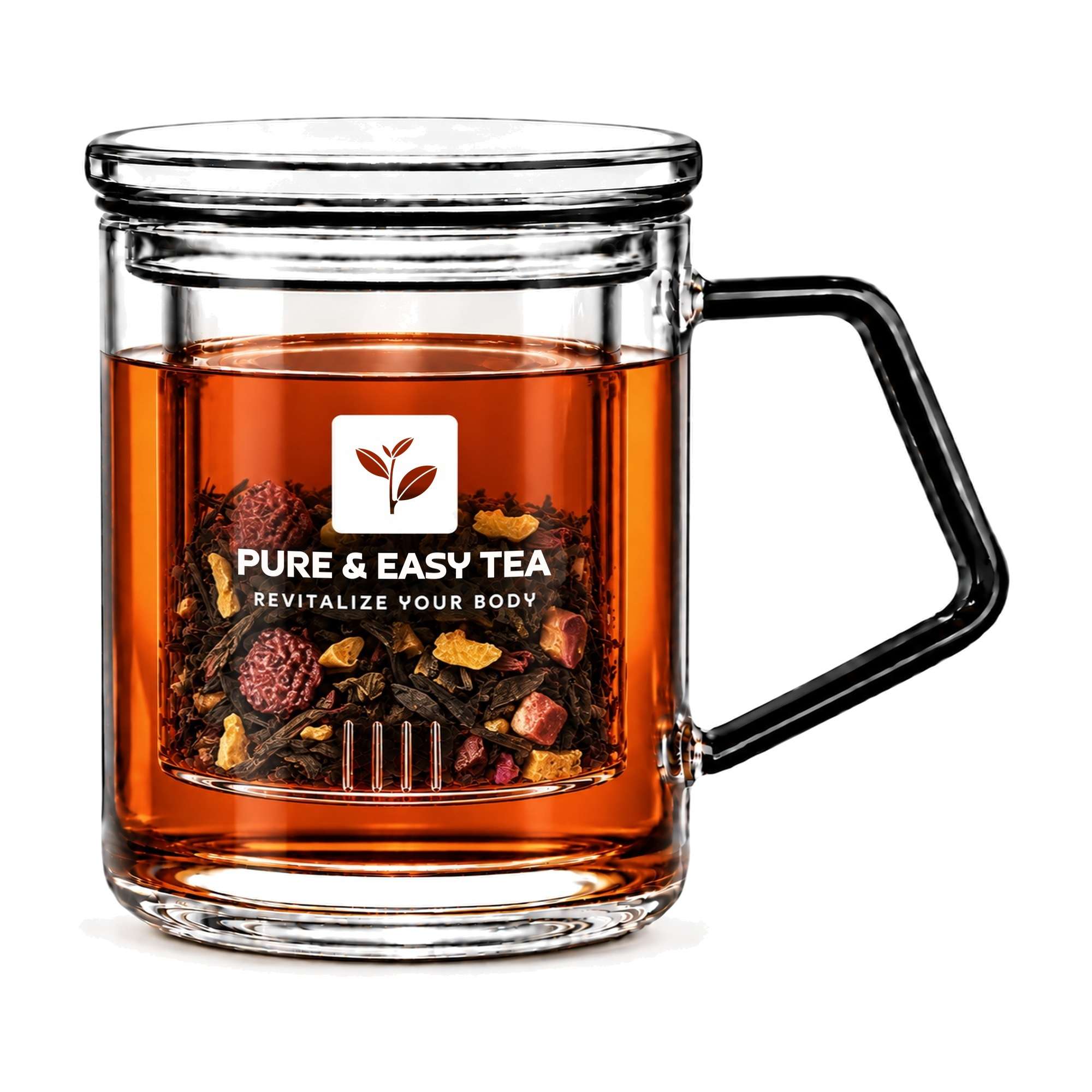
We formulate with whole leaves, flowers, fruits, roots, herbs and spices, choosing each ingredient for what it contributes to the cup.
All of the aroma and taste comes entirely from the ingredients themselves. Never added natural or artificial flavorings.
That standard makes formulation especially important. The character of the blend depends on the botanicals we select and how they work together.
Our intention is to create tea you can appreciate with your senses: the ingredients you see, the aroma released as they steep and the taste that develops in your cup.
Learn more about our approach on our What Is Pure Tea? page, or explore our collection.
Frequently Asked Questions
Is there one international system for grading all tea?
No. Grading terminology varies across origins, tea categories and commercial practices. A designation should be understood within its particular system.
Does Orange Pekoe contain orange?
The grade itself does not indicate orange ingredients or flavoring. Check the ingredient list to see whether anything has been added.
Does a higher leaf grade always taste better?
Not necessarily. A grade may describe appearance, size or tips without fully capturing freshness, processing or the brewed experience.
Can tea bags contain high-quality tea?
Yes. The format alone does not establish quality. Look at the ingredients inside, the information provided and the resulting cup.
Is “premium tea” an official universal grade?
It should not be treated as one. Ask the company to explain what supports its use of the term.
Look Beyond the Letters
Tea grades are useful when you understand what they describe. They become less useful when they are asked to stand in for everything that makes a tea worth drinking.
Read the label. Understand the ingredients. Brew with care.
Then let the cup earn your next one.
Pure & Easy Tea. Tea As It Was Meant To Be.
Continue Exploring
Watch The Pure & Easy Minute, Episode 19: Who Grades Your Tea?
In this episode, Carmine Del Sordi explains why tea grades deserve context, and why choosing well means looking beyond the letters on a label.
See all Pure & Easy Minute episodes →
Related reading from Pure & Easy Tea:
- What Actually Makes a Tea Premium? 7 Standards That Matter More Than the Packaging
- Natural Flavors in Tea: Whole Botanicals vs. Flavor Extracts
- Does Organic Tea Matter? Understanding Organic Certification, Purity and Quality
- Loose Leaf Tea vs. Tea Bags: What Actually Makes a Better Cup?
References
1. Tamil Nadu Agricultural University. Post Harvest Technology: Tea. Overview of processing, sorting, leaf-size grading and storage.
2. European Commission. Commission Implementing Regulation (EU) No 1050/2011. Includes an explanation of Orange Pekoe terminology in the Darjeeling product specification.
3. Ippodo Tea. Is Ippodo Matcha “Ceremonial Grade?” A Japanese producer’s explanation of the term.
Keep reading