
How Long Should You Steep Tea?
Why steeping time matters, what causes bitterness, and how Pure & Easy Tea brings out extraordinary flavor through real ingredients and thoughtful formulation.
By Carmine Del Sordi | Founder, Pure & Easy Tea
Most tea drinkers have been taught a simple rule for how long to steep tea: three to five minutes, then remove the leaves or tea bag, and enjoy.
Leave it too long, we’re told, and the tea will become bitter.
But is that always true?
What happens when you steep tea for ten minutes? Fifteen minutes? Or even overnight?
The answer is more interesting than a number printed on a package.
Steeping is the process of extracting the natural compounds within tea leaves, flowers, fruits, roots, herbs, and other botanicals. Temperature, time, ingredient quality, and formulation all influence what ends up in your cup.
And while some teas become unpleasantly bitter with extended steeping, others can develop deeper, richer, and more satisfying flavors.
At Pure & Easy Tea, we believe exceptional tea deserves more than a hurried dip in hot water. Our blends are crafted from real, recognizable ingredients, without natural or artificial flavorings, allowing the botanicals themselves to create the experience.
To understand why longer steeping can be so rewarding, let’s explore what actually happens when tea meets water.
What Happens When You Steep Tea?
When hot water comes into contact with tea leaves or botanicals, it begins dissolving and extracting their water-soluble compounds.
These include naturally occurring substances responsible for aroma, flavor, color, body, and astringency.
Different compounds enter the water at different rates, and each ingredient has its own extraction characteristics.
Consider the differences:
- Tea leaves contain catechins, other polyphenols, caffeine, amino acids, and aromatic compounds.
- Flowers contribute delicate aromatic compounds, pigments, and other plant constituents.
- Roots and spices often contain flavor compounds within denser plant structures that may take longer to release.
- Fruits and berries contribute naturally occurring acids, pigments, and soluble flavor components.
- Herbs introduce distinct aromatic and botanical characteristics that evolve throughout brewing.
A blend containing several of these ingredients is not necessarily at its fullest expression after three minutes.
Some components begin contributing almost immediately. Others emerge gradually as the botanical material hydrates and its compounds diffuse into the water.
A carefully developed infusion can change considerably between five and fifteen minutes.
That is one reason we encourage tea drinkers to pay attention not only to the clock, but also to the aroma, body, flavor, and balance of the cup.
The science supports this more thoughtful approach. Research published in Molecules found that brewing water composition alone could significantly change the sensory qualities and extraction of catechins in green and black tea.
In other words, even the same leaves can create noticeably different cups depending on how they are prepared.
Why Does Some Tea Become Bitter When Steeped Too Long?
To understand bitterness, it helps to distinguish two sensations that are often confused.
Bitterness is a taste detected by receptors on the tongue.
Astringency is the drying, puckering sensation that some teas leave in the mouth.
They frequently occur together, but they are not the same.
Traditional tea comes from the Camellia sinensis plant. Green tea, black tea, white tea, and oolong all originate from this plant, although their processing methods differ.
These teas naturally contain polyphenols, including catechins, that contribute to their flavor and astringency. Caffeine can also contribute bitterness.
As tea steeps, temperature and time influence how much of these compounds enter the water.
Researchers studying green tea found that extending brewing time increased measured astringency. Another study examining brewing conditions found that very long hot infusions produced less desirable sensory results, including pronounced bitterness.
The lesson is not that longer steeping is inherently bad.
It is that different teas have different extraction profiles, and greater extraction does not always mean better flavor.
A delicate green tea may be at its best after only a few minutes at a moderate temperature. A robust black tea may tolerate hotter water, but can still become excessively strong.
A botanical infusion containing roots, fruits, flowers, and herbs may behave quite differently.
That distinction is essential to understanding the Pure & Easy Tea difference.
Scientific references:
- Exploring the Relative Astringency of Tea Catechins — Foods, 2022
- Effects of Different Brewing Conditions on Catechin Content and Sensory Acceptance — Journal of Food Science and Technology, 2015
The Pure & Easy Tea Difference: Formulated for the Experience, Not Just the First Sip
At Pure & Easy Tea, our philosophy begins long before water enters the cup.
We search for exceptional tea leaves and botanicals, then thoughtfully combine them to create formulations with distinctive flavor, complexity, and purpose.
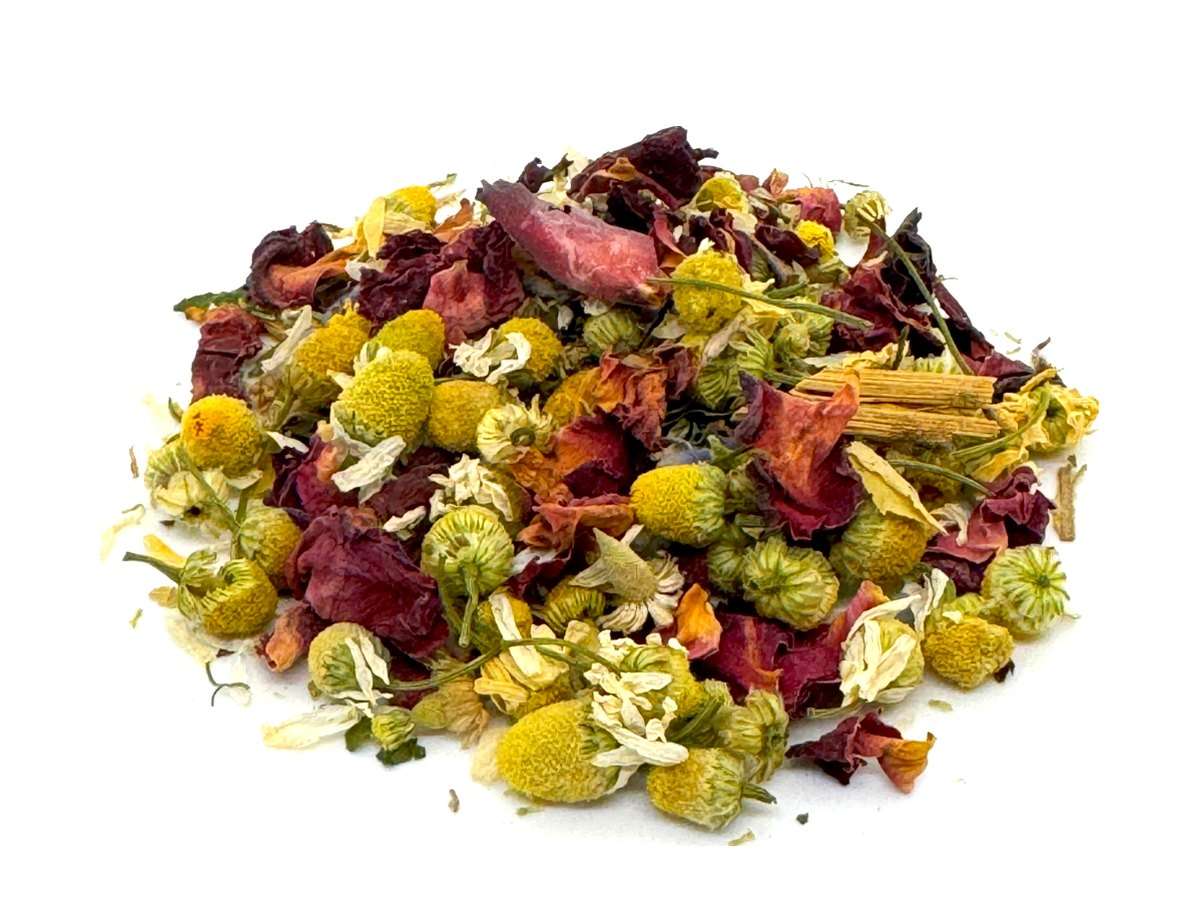
Some contain numerous complementary ingredients, including carefully selected flowers, herbs, fruits, roots, and adaptogenic botanicals.
Each has a reason for being there.
But ingredient selection is only part of the process.
The proportions matter. The balance matters. And the way the ingredients behave together during brewing matters.
We do not add natural or artificial flavorings to manufacture a particular taste.
If we want citrus character, we use real citrus ingredients.
If we want floral notes, we select actual flowers and botanicals.
If we want warmth, depth, or earthiness, we build those qualities through the ingredients themselves.
This requires careful formulation because real botanicals behave differently from added flavor preparations.
They hydrate. They unfurl. They release their compounds over time. And they interact with one another in ways that determine the final character of the infusion.
A well-balanced botanical blend can reveal additional layers during extended steeping without necessarily developing the harshness associated with overbrewed traditional tea.
That is one of the qualities we value in many of our formulations.
Rather than designing a cup around an immediate burst of added flavor, we allow the actual ingredients to create a more complete experience as they steep.
This does not mean every Pure & Easy blend should be steeped indefinitely. Our blends containing green tea, black tea, oolong, or other naturally tannic ingredients still respond to temperature and extended extraction.
But many of our botanical-forward infusions reward patience with remarkable depth, natural sweetness, and smoothness.
It is a difference worth experiencing.
Discover What Makes Pure & Easy Tea Different
Can You Really Steep Tea Overnight Without It Becoming Bitter?
Yes. Depending on the ingredients and brewing method, an overnight infusion can be beautifully smooth.
The key is understanding the distinction between extended hot steeping and overnight cold brewing.
They are not the same process.
When tea is brewed in hot water, extraction generally occurs more quickly. Some compounds responsible for bitterness and astringency can become more prominent as steeping continues.
When tea is brewed in cold water and refrigerated, extraction proceeds differently.
Research has repeatedly shown that cold-brewed teas can develop a smoother, less bitter sensory profile than comparable hot-brewed infusions.
One study published in the Journal of Food Processing and Preservation found that cold-brewed green tea produced lighter infusions with less bitterness and astringency under the tested conditions.
More recent research in Food Chemistry examined the chemistry behind this difference. The investigators found that cold brewing slowed the extraction of several bitter compounds, while changing the balance of other flavor-related substances.
And research on rooibos, a naturally caffeine-free botanical infusion, found that cold brewing produced a sweeter and less astringent sensory profile than conventional hot brewing.
This is especially interesting for complex botanical blends.
Imagine a carefully balanced infusion containing aromatic leaves, delicate flowers, real fruit, and roots.
During a long, refrigerated steep, their flavors can gradually develop into a layered and refreshing beverage.
Instead of tasting stronger simply because it has spent more time in water, the infusion may taste more complete.
At Pure & Easy Tea, we particularly enjoy exploring this slower method with blends suited to cold preparation.
It allows us to experience the ingredients from an entirely different perspective.
An overnight steep is not automatically better for every blend. But when the ingredients and temperature are right, time can become an ally rather than an enemy.
Important: Overnight brewing should take place in the refrigerator, not on the kitchen counter. Keep the infusion covered and properly chilled.
Scientific references:
- Effect of Different Brewing Methods on Quality of Green Tea — Journal of Food Processing and Preservation
- The Chemical Basis of Aroma, Taste, and Color Formation During Cold Brewing — Food Chemistry, 2025
- Cold Brewing of Rooibos Tea Affects Its Sensory Profile — LWT, 2020
How Long to Steep Tea: Starting Times by Type
There is no universal steeping time that produces the best result for every tea.
The following ranges provide useful starting points.
| Tea Type | Typical Water Temperature | Starting Steep Time |
|---|---|---|
| Green tea | 160–180°F | 2–3 minutes |
| White tea | 170–185°F | 3–5 minutes |
| Oolong tea | 185–205°F | 3–5 minutes |
| Black tea | 195–212°F | 3–5 minutes |
| Herbal and floral infusions | 200–212°F | 5–10 minutes |
| Dense botanical blends with roots and spices | 200–212°F | 7–15 minutes, as appropriate |
| Cold-brewed tea | Refrigerated, 40°F or below | 8–12 hours |
These are broad guidelines rather than rigid rules. Individual teas, cut sizes, concentrations, and botanical compositions differ. Always begin with the directions for your specific blend.
And remember that certain delicate ingredients may require special care even when combined with more robust botanicals.
At Pure & Easy Tea, we generally recommend allowing our more complex wellness and performance blends additional time to infuse so that their denser ingredients can contribute to the cup.
For conventional green teas and other more delicate leaves, a shorter, temperature-controlled infusion may preserve a more desirable flavor balance.
There is no prize for making tea as strong as possible. The goal is to bring out its best qualities.

How to Make an Extraordinary Overnight Cold Brew
Cold brewing is one of the simplest ways to experience tea differently.
It requires little preparation and can reward you with an exceptionally refreshing cup the following day.
The Pure & Easy Overnight Brewing Method
1. Choose your blend.
Begin with a Pure & Easy Tea blend suited to cold brewing. Botanical-forward formulations can be particularly interesting because their layers of fruit, flowers, herbs, and other ingredients often develop beautifully over time.
2. Use a generous serving.
As a starting point, use approximately one tablespoon of loose-leaf tea per eight ounces of water, adjusting for the density of the blend and your desired strength.
3. Add cold, filtered water.
Place the ingredients into a clean glass pitcher or infuser and add cold water.
4. Cover and refrigerate for 8–12 hours.
Keep the infusion refrigerated at 40°F or below throughout the brewing process. Do not leave it steeping overnight at room temperature.
5. Strain, taste, and enjoy.
Taste the finished tea before adding anything else.
Notice the natural aroma. The body. The sweetness or tartness. The finish.
Some blends may offer a remarkably smooth result without any added sugar or sweeteners.
For particularly dense roots or other ingredients requiring hot preparation, follow the product instructions rather than assuming that cold water will provide an equivalent extraction.
Use clean brewing equipment, refrigerate promptly, and enjoy the prepared tea while fresh.
Explore the Pure & Easy Tea Brewing Guide
Does Steeping Longer Make Tea Healthier?
This is another question worth approaching carefully.
Longer steeping can increase the extraction of certain naturally occurring plant compounds, but that does not mean every compound continues increasing indefinitely.
Nor does it mean the longest-steeped cup is necessarily the most beneficial.
Extraction varies according to the ingredient, compound, brewing temperature, and time.
For example, research on green tea has shown that different brewing conditions can significantly influence concentrations of individual catechins.
Some compounds may be extracted quickly, while others respond differently as temperature or time increases.
A compound can also undergo chemical changes during prolonged brewing.
The overall result is more complex than simply assuming that an extra ten minutes produces proportionally more beneficial constituents.
There is another important distinction: the amount of a compound extracted into water does not, by itself, establish a health benefit in humans.
Our approach to functional tea respects that distinction.
At Pure & Easy Tea, we select ingredients for their botanical characteristics, traditional uses, available scientific research, and their contribution to a carefully formulated blend.
We believe in making the ingredients visible and understandable, rather than promising that a particular steeping duration will produce a specific medical outcome.
Our goal is to make extraordinary tea that people genuinely enjoy incorporating into everyday life.
For us, flavor, ingredient integrity, and purposeful formulation belong together.
Why the Amount of Tea Matters as Much as Steeping Time
One of the most common brewing mistakes has nothing to do with the clock.
It is using too little tea for the volume of water.
A single serving designed for an eight-ounce cup will naturally taste different when diluted into a sixteen- or twenty-ounce mug.
Leaving that small quantity in hot water for another fifteen minutes may not fully compensate for the difference in concentration.
You may simply extract more of the compounds that produce bitterness or astringency while still lacking the desired body.
A better approach is to increase the amount of tea when preparing a larger serving.
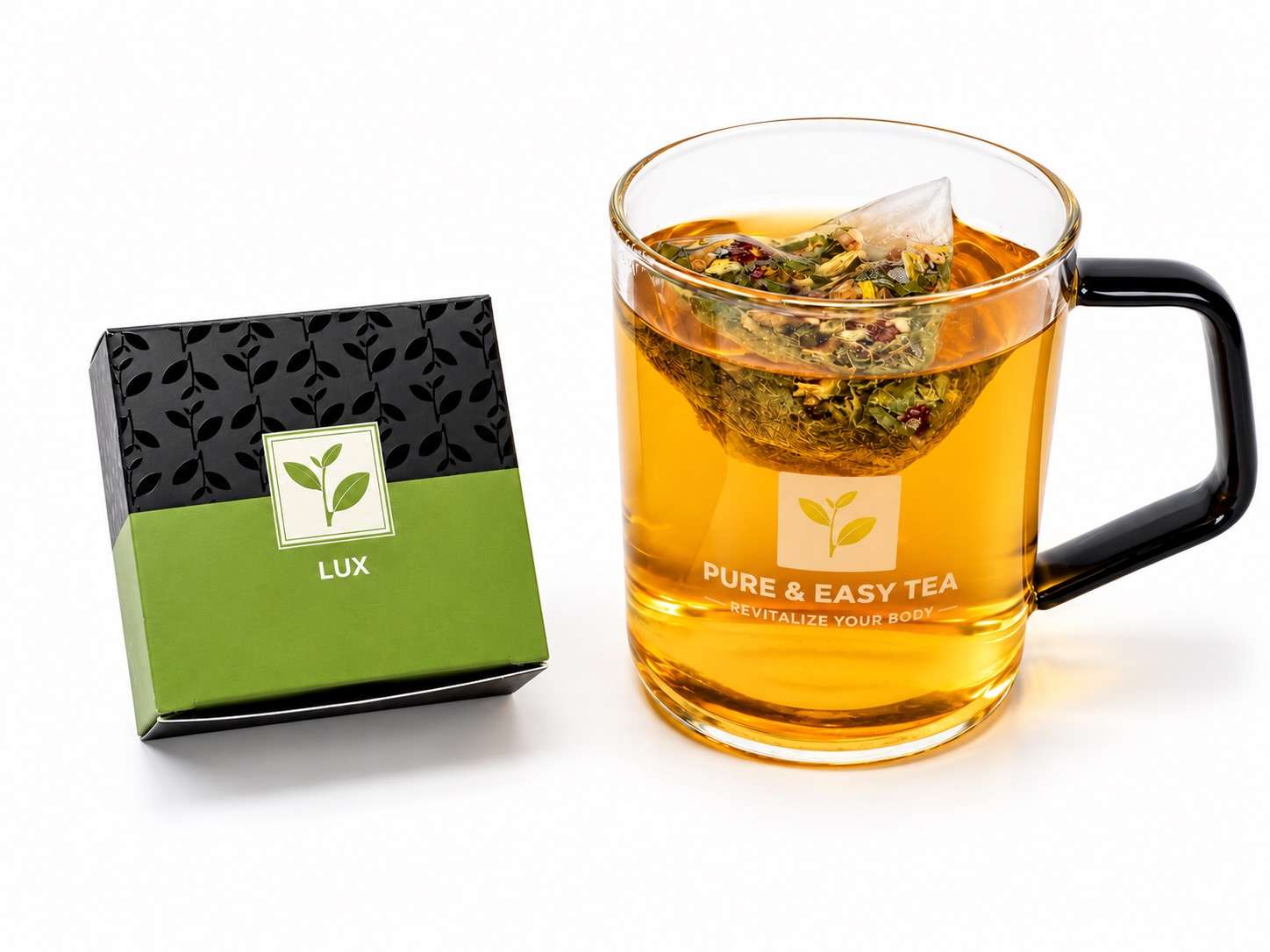
This is especially relevant to our generously filled pyramid sachets.
We believe a premium tea sachet should contain enough high-quality ingredients to create a satisfying cup, not merely enough material to color the water.
Our whole leaves and botanicals are also given room to hydrate and expand, allowing the infusion to develop naturally.
And because our flavor comes from real ingredients, the amount of tea you use genuinely matters.
You are extracting the botanicals themselves, not relying on an added flavoring to create the impression of a stronger tea.
Can You Steep the Same Tea More Than Once?
Absolutely. Many high-quality teas and botanical blends can be infused more than once.
In fact, a second steep is an excellent way to explore how flavor changes over time.
The first infusion often releases the most readily extracted aromatic and soluble compounds.
A second infusion may reveal a softer, subtler expression of the same ingredients.
Some teas can produce several enjoyable infusions, depending on the leaves, preparation method, and desired strength.
At Pure & Easy Tea, we encourage customers to explore this experience with appropriate blends rather than assuming a sachet or serving of loose-leaf tea has nothing left to offer after its first cup.
A generous portion of quality whole ingredients can sometimes provide more than one satisfying experience.
For food safety, re-steep promptly rather than keeping wet tea leaves or botanicals at room temperature for extended periods.
A second infusion may not contain the same concentration or combination of compounds as the first, and neither should be considered equivalent without analysis.
But from a flavor and ritual perspective, there is something wonderful about discovering what the ingredients still have to offer.
The Beauty of Brewing Tea in Glass
We believe the way tea is prepared should reflect the quality of the ingredients.
That is one reason we favor our borosilicate glass brewing mug.
When brewing whole leaves, flowers, fruits, and botanicals, there is something special about watching them come to life.
Leaves unfurl.
Flowers open.
Fruit begins contributing natural color.
Roots and herbs gradually release their character.
The water transforms.
Glass lets you experience that transformation without hiding the ingredients.
Our glass infuser also provides a way to brew loose-leaf tea without requiring a disposable tea bag, while allowing you to remove the botanicals when your preferred strength is reached.
It’s a simple idea, but one that captures the philosophy behind Pure & Easy Tea.
We don’t believe exceptional ingredients should be concealed.
We believe they should be celebrated.
Prefer the One-Minute Version?
Watch Episode 10 of The Pure & Easy Minute: How Long Should You Steep Tea?
See all Pure & Easy Minute episodes »
The Best Steeping Time Is the One That Honors the Tea
So, how long should you steep tea?
When you decide how long to steep tea, start with the recommended brewing instructions.
Consider the kind of tea you’re preparing.
Use the right water temperature and enough tea for the amount of water.
Then pay attention to what happens in your cup.
A delicate green tea may be wonderful after three minutes.
A complex botanical infusion may become richer and more expressive after ten or fifteen.
And a thoughtfully prepared overnight cold brew may reveal extraordinary smoothness and entirely new layers of flavor.
There is no single steeping time that defines a perfect cup.
The ingredients, the formulation, and the method make the difference.
At Pure & Easy Tea, we believe exceptional tea begins with exceptional ingredients: whole leaves, flowers, fruits, roots, herbs, and botanicals selected with intention.
Never natural or artificial flavorings.
Never manufactured shortcuts to imitate what nature already provides.
Just real ingredients, thoughtfully combined and given the time and care they deserve.
Because tea should not be measured only by how quickly it brews.
It should be appreciated for what the experience becomes.
Tea As It Was Meant To Be.
Continue Exploring
Watch Episode 10 of The Pure & Easy Minute: How Long Should You Steep Tea?
Join Pure & Easy Tea founder Carmine Del Sordi for a one-minute exploration of why brewing time, ingredient quality, and the way you prepare your tea matter.
Explore The Pure & Easy Minute
Discover the Pure & Easy Tea Difference
Learn why we formulate with real, recognizable botanicals, purposeful ingredient combinations, and no added natural or artificial flavorings.
Learn to Brew Better Tea
Explore our complete guide to brewing loose-leaf tea, pyramid sachets, and cold-brewed infusions.
Scientific References and Further Reading
- Özdemir, F., et al. (2015). Effects of different brewing conditions on catechin content and sensory acceptance in Turkish green tea infusions. Journal of Food Science and Technology. Read study
- Exploring the Relative Astringency of Tea Catechins and Distinct Astringent Sensation of Catechins and Flavonol Glycosides via an In Vitro Assay. (2022). Foods. Read study
- The Influence of Water Composition on Flavor and Nutrient Extraction in Green and Black Tea. (2019). Molecules. Read study
- Lin, S. D., et al. Effect of Different Brewing Methods on Quality of Green Tea. Journal of Food Processing and Preservation. Read study
- Yang, C., et al. (2025). The Chemical Basis of Aroma/Taste and Color Formation in Green Tea Infusion During Cold Brewing Revealed by Metabolomics Analysis. Food Chemistry. Read study
- Muller, M., et al. (2020). Cold Brewing of Rooibos Tea Affects Its Sensory Profile and Physicochemical Properties Compared to Regular Hot and Boiled Brewing. LWT. Read study
- Tea and Herbal Association of Canada. Frequently Asked Questions: Tea Brewing and Preparation. Read guidance
- Centers for Disease Control and Prevention. Preventing Food Poisoning: Safe Refrigeration and Food Handling. Read guidance
Scientific studies cited here investigate specific teas and brewing conditions. Their results should not be interpreted as laboratory validation of every Pure & Easy Tea formulation or as evidence of medical benefits from a particular brewing method.
Keep reading