
Does Organic Tea Matter?
Organic certification tells us something important about how tea is grown. But does it tell us everything we need to know about the tea in our cup?
When shopping for tea, the word organic carries considerable weight. For many consumers, it signals a cleaner, more natural product, one grown with greater care for the environment and fewer synthetic agricultural chemicals.
Those are meaningful considerations. Organic agriculture follows established standards designed to protect natural resources and restrict the use of certain substances.
But an important question remains: Does organic certification automatically mean a tea is safer, purer or higher quality?
The answer is more nuanced than a label alone can convey.
To understand what makes a truly exceptional tea, we need to look beyond any single certification and consider how ingredients are grown, selected, processed, tested and ultimately blended.
What Does Organic Tea Actually Mean?
In the United States, organic certification is governed by the U.S. Department of Agriculture (USDA) through its National Organic Program.
USDA organic standards establish requirements for agricultural production and handling, including restrictions on most synthetic pesticides and fertilizers, prohibitions on genetic engineering and practices intended to support soil health and ecological balance.
For a product to carry the USDA Organic seal, it must meet applicable certification requirements.
The labeling distinctions are worth understanding:
- 100% Organic: Contains only organically produced ingredients, excluding water and salt.
- Organic: Contains at least 95% certified organic ingredients, with the remainder subject to specific restrictions.
- Made with Organic Ingredients: Contains at least 70% certified organic ingredients, with additional labeling requirements.
These distinctions matter, particularly for teas containing multiple herbs, flowers, fruits and roots.
Organic certification provides an independently verified framework for how agricultural ingredients are produced and handled.
That is valuable. But it is not the same as a comprehensive assessment of every quality characteristic of the finished tea.

Does Organic Mean Pesticide-Free?
This is one of the most common misconceptions surrounding organic food and beverages.
Organic does not necessarily mean pesticide-free.
Under USDA organic standards, growers may use certain approved pesticides and other agricultural inputs. These substances must meet the requirements of the National Organic Program.
In addition, trace pesticide residues can sometimes appear in organic agricultural products through environmental contamination, spray drift or contact during handling.
A 2026 study reported by the Berlin-Brandenburg State Laboratory in Germany examined pesticide residues in conventionally and organically grown green and black teas.
Researchers found quantifiable pesticide residues in 62.5% of conventional tea samples compared with 20.8% of organic samples.
The findings support the value of organic cultivation in reducing the likelihood of detectable pesticide residues, while also demonstrating that organic certification does not guarantee their complete absence.
There is another important distinction: detecting a residue does not automatically mean a product presents a health risk. The substance, concentration, applicable regulatory limits and potential exposure must all be considered.
For consumers, the takeaway is straightforward.
Organic production practices matter, but laboratory analysis provides additional information about what may actually be present in a particular tea sample.
Why Independent Laboratory Testing Matters
Tea is an agricultural product.
Like fruits, vegetables, grains and herbs, tea plants absorb substances from their growing environment. Depending on the plant, soil conditions and environmental exposure, unwanted contaminants may sometimes be present.
Two categories deserve particular attention.
Pesticide Residues
Pesticides may be used in agriculture to protect crops from insects, fungi and other threats.
Modern laboratory methods can screen for a broad range of pesticide residues in dried tea leaves and botanical ingredients.
A 2022 study published in Food Chemistry evaluated methods capable of analyzing 397 pesticides in commercial teas. The researchers identified samples with pesticide residues exceeding applicable European maximum residue limits.
The study illustrates why agricultural sourcing and analytical testing both deserve attention.
Heavy Metals
Certain elements, including lead, cadmium and arsenic, can occur naturally in soil or enter growing environments through pollution and other sources.
Plants may absorb some of these elements, although uptake varies considerably by species, growing conditions and the particular element involved.
Organic cultivation does not eliminate naturally occurring heavy metals from soil.
Laboratory testing can help identify their presence and concentrations in botanical ingredients or finished products.
It is also important to distinguish testing the dried ingredients from testing the brewed beverage. Not every substance present in a dried leaf transfers into the cup at the same rate.
The important principle is that organic certification and contaminant testing answer different questions.
One evaluates compliance with established production and handling standards. The other provides analytical information about substances present in the tested sample.
Neither replaces the other.
Is Organic Tea Always Better Quality?
Not necessarily.
Quality is multidimensional, and organic certification was not designed to serve as a universal rating system for flavor, aroma, leaf grade or blending craftsmanship.
Consider two teas grown under different agricultural systems.
One might be organically certified but consist primarily of finely broken leaves, with limited aroma and little complexity in the cup.
Another might come from a carefully managed, noncertified garden producing exceptional whole leaves with remarkable aroma, structure and flavor.
Organic certification alone cannot determine which will provide the better sensory experience.
Tea quality can depend on several factors:
Growing conditions. Climate, altitude, soil, rainfall and seasonal conditions influence how tea plants develop.
Harvesting. The timing of harvest and selection of leaves can affect flavor, texture and aroma.
Processing. Withering, oxidation, rolling, heating and drying contribute to the distinctive characteristics of different teas.
Ingredient integrity. Whole leaves, recognizable flowers, fruits and roots can offer a different sensory experience from heavily fragmented ingredients.
Blending expertise. Thoughtful formulations require an understanding of how ingredients interact, both in the dry blend and during infusion.
Storage and freshness. Exposure to moisture, heat, light and oxygen can influence the quality of tea over time.
A superior tea is the result of many decisions, from cultivation through preparation.
Organic certification can be one meaningful part of that story, but it does not tell the whole story.
Can Organic Tea Contain Added Flavorings?
Yes.
Another common misunderstanding is that an organic tea must contain only whole, recognizable botanical ingredients.
Under applicable USDA rules, certified organic processed products may contain permitted natural flavors and other approved ingredients, subject to organic labeling and composition requirements.
A tea may therefore comply with organic standards while using added flavorings to achieve a particular taste or aroma.
That is not inherently a violation of organic standards. But it illustrates why the ingredient list matters just as much as the certification claim.
A tea labeled organic strawberry tea, for example, does not necessarily rely exclusively on dried strawberries to create its strawberry character.
The flavor may come partly from an approved flavoring ingredient.
For consumers who specifically want tea made from whole leaves, real fruits, flowers, herbs and roots, reading the full ingredient list is essential.
Organic tells you something about production standards. The ingredient list tells you what was used to make the product.
They are complementary pieces of information.
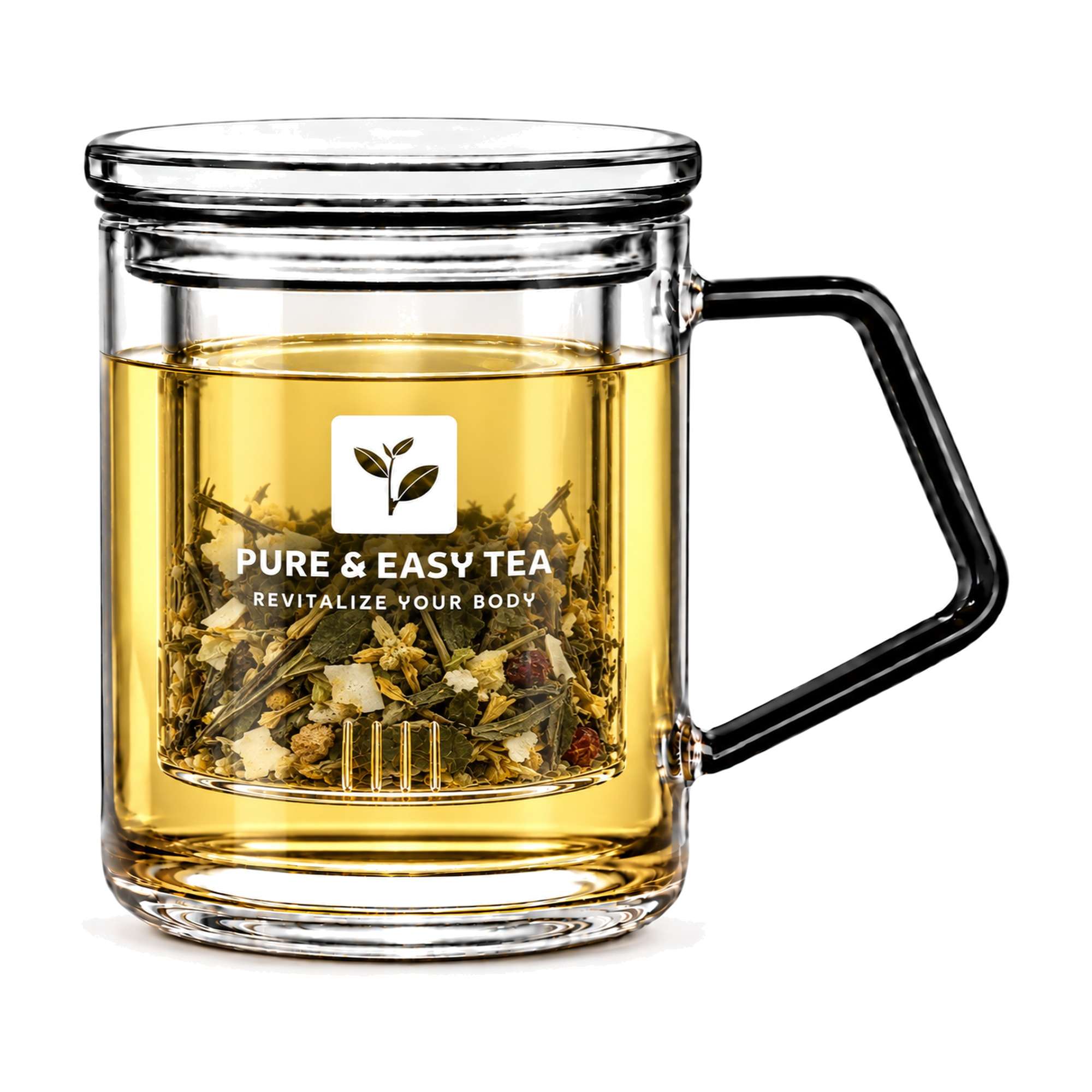
The Pure & Easy Tea Difference: Purity With Purpose
At Pure & Easy Tea, we believe a remarkable cup of tea begins with the ingredients themselves.
Our philosophy is simple: what you see in the blend is what unfolds in the cup.
We formulate our teas using whole leaves, flowers, fruits, herbs and roots, selected for their individual character and the way they complement one another.
We never add natural or artificial flavorings, fragrances, colorings or sweeteners.
When a blend includes rose petals, orange peel, ginger or other botanicals, those ingredients are there to contribute their authentic character to the finished infusion.
Nothing needs to imitate them.
We also recognize that exceptional taste should be supported by responsible quality practices.
That is why we have our tea batches independently tested in California for heavy metals and pesticide residues.
This testing provides additional information about the products we offer. As with any laboratory analysis, the conclusions are specific to the samples tested, the substances screened and the methods and reporting limits used.
We believe consumers deserve to understand not only what goes into their tea, but also the standards and decisions behind it.
Our approach is not to suggest that organic certification lacks value. Quite the opposite.
We respect the role organic agriculture plays in responsible production.
We simply believe that quality deserves a broader conversation, one that includes sourcing, ingredient transparency, testing, formulation and the actual experience in the cup.
How to Choose a High-Quality Tea
Whether you prefer organic tea, conventionally grown tea or a combination of both, a few thoughtful questions can help you make a more informed choice.
1. Read the Complete Ingredient List
Look beyond the name on the front of the package.
Does the blend contain recognizable tea leaves, fruits, flowers and herbs? Are added flavorings or sweeteners included?
Neither certification nor attractive packaging substitutes for understanding what is actually in the blend.
2. Understand What Certifications Mean
A legitimate organic certification provides assurance about compliance with defined agricultural and handling standards.
It does not automatically guarantee superior flavor, the absence of all contaminants or the exclusion of every type of added flavoring.
3. Ask About Quality Testing
Does the company conduct or commission laboratory analysis for relevant contaminants?
Can it explain what is tested, how often testing occurs and what standards are used to interpret the results?
Transparency is more meaningful than an unsupported promise of purity.
4. Consider Ingredient Quality and Formulation
Examine the leaves and botanicals when possible.
Whole leaves and clearly identifiable ingredients can provide useful insight into a tea’s composition, although appearance alone does not establish safety or superiority.
The ultimate test of sensory quality remains the aroma, balance and character of the brewed tea.
5. Choose a Brand That Explains Its Standards
Trust is built through clear information, consistent practices and a willingness to answer reasonable questions.
The best tea brands should be able to explain why they use particular ingredients and how they approach quality.
Frequently Asked Questions About Organic Tea
Is organic tea healthier than regular tea?
Organic certification does not automatically establish that a tea is more nutritious or provides greater health benefits. The evidence depends on the specific comparison and outcomes studied. Tea composition is influenced by plant variety, cultivation, processing and brewing.
Does organic tea contain pesticides?
It can. Certain pesticides are permitted under organic standards, and residues from environmental contamination may sometimes be detected. Organic cultivation generally restricts the use of most synthetic pesticides.
Is nonorganic tea safe to drink?
Nonorganic tea is not inherently unsafe. Safety depends on factors including contaminants, their concentrations and relevant food safety requirements. Responsible sourcing and testing practices can provide useful additional assurance.
Can organic tea contain natural flavors?
Yes. Some flavoring substances are permitted in certified organic processed products under applicable requirements. Consumers seeking tea without added flavorings should check the complete ingredient list.
Does organic certification test for heavy metals?
Organic certification is not a substitute for a dedicated heavy metals testing program. Heavy metal analysis addresses a different quality and safety consideration than organic production compliance.
Is organic tea worth the extra cost?
It may be, particularly for consumers who prioritize organic farming practices and the standards behind certification. But price and certification alone do not determine flavor, leaf quality or overall value.
The Bottom Line: Organic Matters, but So Does Everything Else
Organic certification has an important place in agriculture and food production. It gives consumers a meaningful way to identify products grown and handled according to recognized standards.
So, does organic tea matter? Yes. But when it comes to tea, there is more to consider.
The quality of the leaves. The integrity of the botanicals. The skill of the formulation. The attention given to testing. And the honesty of the ingredient list.
These details shape the product long before the water is poured.
At Pure & Easy Tea, we believe the best tea experience begins with respect for the ingredients and a commitment to transparency at every step.
Because purity should be more than a word on a package.
It should be something you can understand, appreciate and experience in every cup.
Pure & Easy Tea. Tea as Nature Intended.
Continue Exploring
Watch The Pure & Easy Minute, Episode 13: Is Organic Tea Better?
A one-minute explanation of what organic certification means and what else matters when choosing tea.
See all Pure & Easy Minute episodes →
Related reading from Pure & Easy Tea:
- Natural Flavors in Tea: Whole Botanicals vs. Flavor Extracts
- What Actually Makes a Tea Premium? 7 Standards That Matter More Than the Packaging
- Microplastics in Tea: What the Latest Heart Research Means
References
1. USDA Agricultural Marketing Service. Labeling Organic Products. Explains certification and labeling requirements.
2. National Pesticide Information Center. Pesticide Ingredients Used in Organic Agriculture. Explains why organic does not necessarily mean pesticide-free.
3. Berlin-Brandenburg State Laboratory (2026). Analysis of Pesticides in Organic and Conventionally Farmed Green and Black Teas. Reports the comparative tea residue findings used in the article.
4. Ly, T.-K. et al. (2022). Quantification of 397 Pesticide Residues in Different Types of Commercial Teas. Food Chemistry, 370, 130986.
5. USDA National Organic Program. Flavors: Organic Handling Standards. Addresses flavoring ingredients permitted under organic regulations.
6. U.S. Food and Drug Administration. Environmental Contaminants in Food. Explains how contaminants such as heavy metals enter the food supply.
Keep reading