

Does Tea Dehydrate You? What the Science Says About Tea and Hydration
Tea has carried an undeserved reputation for years: because it contains caffeine, it must take more water out of your body than it puts in.
For ordinary tea drinking, the evidence tells a different story. Tea contributes to hydration. The caffeine in a typical cup does not cancel out the fluid you drink.
That matters whether you are enjoying a morning cup, spending time outdoors, or choosing what to bring to the tennis court. Understanding the difference between caffeine’s effects and a beverage’s overall contribution to hydration helps you make a more informed choice.
Why People Think Tea Is Dehydrating
Caffeine can have a diuretic effect, meaning it can increase urine production. But an increase in urination does not automatically mean a drink leaves you dehydrated.
The relevant question is whether that effect outweighs the fluid the beverage supplies. Research on tea and caffeine does not support treating ordinary tea consumption as a net loss of water.[1,2]
A cup of brewed tea delivers water along with compounds extracted from the leaves and botanicals. Evaluating the caffeine alone misses the beverage as a whole.
What Studies Actually Show
A randomized crossover trial published in the British Journal of Nutrition compared black tea with water in 21 healthy men. Participants consumed four or six servings of tea, supplying a total of 168 or 252 milligrams of caffeine, or comparable amounts of water. Researchers found no significant differences between the tea and water conditions in the blood and urine measures of hydration assessed.[1]
The study was small, conducted at rest, and funded by the Tea Advisory Panel, an industry-supported organization. It does not establish what happens with every tea, every person, or every exercise condition. It does, however, directly challenge the claim that normal black tea consumption dehydrates you.
The NHS guidance on water, drinks and hydration also includes tea and coffee among drinks that count toward daily fluid intake.[3]
Your tea counts. You do not need to subtract it from your daily fluids simply because it contains caffeine.
What About Tea During Exercise?
Caffeine’s relationship with hydration is particularly relevant to active people.
A meta-analysis of 16 studies, published in the Journal of Science and Medicine in Sport, found a small overall diuretic effect from caffeine. When the researchers examined exercise conditions separately, that effect was not statistically significant.[2]
This supports including tea in an active person’s fluid intake. It does not establish that tea prevents dehydration regardless of how much you sweat, or that any particular blend improves athletic performance.
During exercise, the practical questions are how much fluid you lose, how much you replace, and whether the duration and conditions call for additional sodium or fuel. A drink can contribute water while still being only one part of that plan.
Why We Created EnduraBoost
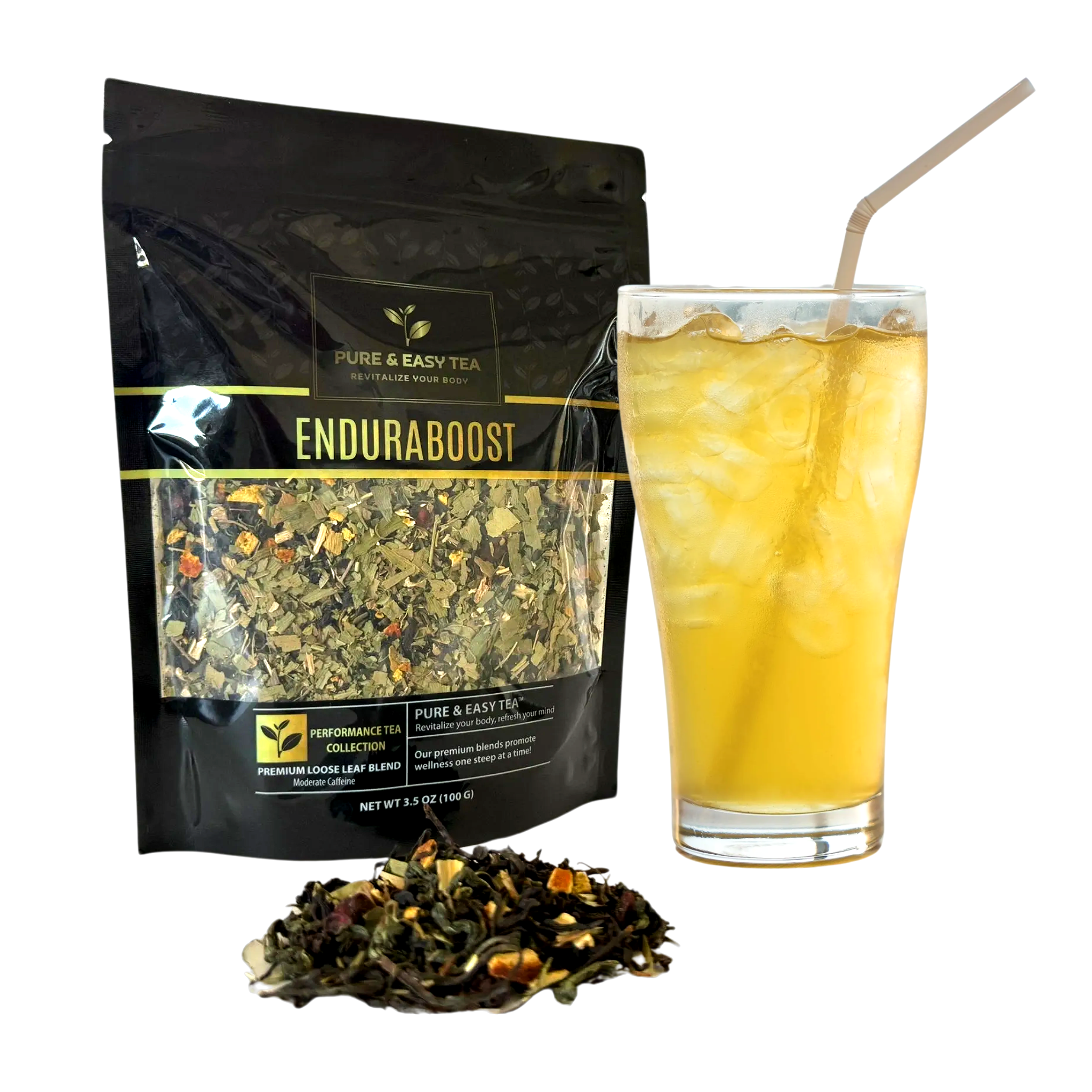
Hydration was part of the thinking behind EnduraBoost, our botanical blend created with active days in mind. Had ordinary tea consumption worked against hydration, it would have undermined our reason for creating it.
EnduraBoost combines black tea, ginkgo biloba, eleuthero leaves, gotu kola, schisandra berry, ashwagandha, orange peel, and lemon verbena. Its three adaptogens—eleuthero, schisandra, and ashwagandha—are part of its purposeful formulation. Its aroma and taste come entirely from the ingredients themselves, with no added natural or artificial flavorings.
Enjoyed before activity, sipped chilled during sports, or included in the recovery routine afterward, brewed EnduraBoost contributes fluid. Its hydration contribution comes from the water in the cup; the adaptogens are a separate aspect of the blend. Black tea supplies naturally occurring caffeine; we classify EnduraBoost as moderate-caffeine, with the amount in a serving varying with preparation.
The blend was created to fit an active lifestyle; the hydration evidence discussed here concerns tea and caffeine generally, rather than clinical testing of EnduraBoost.
Hydration During Sports Takes More Than One Beverage
For a walk or a shorter, easier workout, water may be all you need. Longer sessions, substantial sweating, and hot conditions can require a more deliberate approach to replacing fluid and sodium. Fuel needs also change with the demands of the activity.[4]
The National Athletic Trainers’ Association’s position statement on fluid replacement emphasizes individual needs before, during, and after activity, including the risks of both insufficient fluid and overdrinking.
Unsweetened tea can contribute to that routine, but it should not be assumed to provide the sodium or carbohydrate needed for prolonged exertion. After exercise, replacing lost fluid belongs alongside appropriate food and rest.
Tea can help supply the water. Your activity determines what else you need.

Making Tea Part of Your Daily Hydration
There is no need to turn hydration into a complicated ritual. Keep water available, drink regularly, and include tea when you enjoy it.
Choose caffeinated or caffeine-free blends according to your preferences and sensitivity. An herbal infusion made entirely from caffeine-free ingredients contributes fluid without caffeine; a blend containing black tea or another caffeine-bearing ingredient requires a different consideration.
Hot and chilled tea both contribute water. Choose the temperature that makes the drink comfortable and enjoyable. In hot weather or during activity, pay attention to increased fluid needs rather than assuming your usual intake will always be enough.[3]
Prefer the One-Minute Version?
Watch Episode 12 of The Pure & Easy Minute: Does Tea Dehydrate You?
See all Pure & Easy Minute episodes »
A Cup You Can Count On
At Pure & Easy Tea, transparency means explaining both what is in the blend and what the evidence supports.
Ordinary tea drinking contributes to hydration. It does not become dehydrating simply because the leaves contain caffeine.
Choose a blend for the quality of its ingredients, the pleasure of its aroma and taste, and how it fits your day. You can enjoy the ritual and count the water in your cup.
References
- Ruxton CHS, Hart VA. (2011). Black tea is not significantly different from water in the maintenance of normal hydration in human subjects: results from a randomised controlled trial. British Journal of Nutrition, 106(4), 588–595. DOI: 10.1017/S0007114511000456.
- Zhang Y, et al. (2015; published online 2014). Caffeine and diuresis during rest and exercise: A meta-analysis. Journal of Science and Medicine in Sport, 18(5), 569–574. DOI: 10.1016/j.jsams.2014.07.017.
- NHS. Water, drinks and hydration.
- McDermott BP, et al. (2017). National Athletic Trainers’ Association Position Statement: Fluid Replacement for the Physically Active. Journal of Athletic Training, 52(9), 877–895. DOI: 10.4085/1062-6050-52.9.02.
Keep reading