
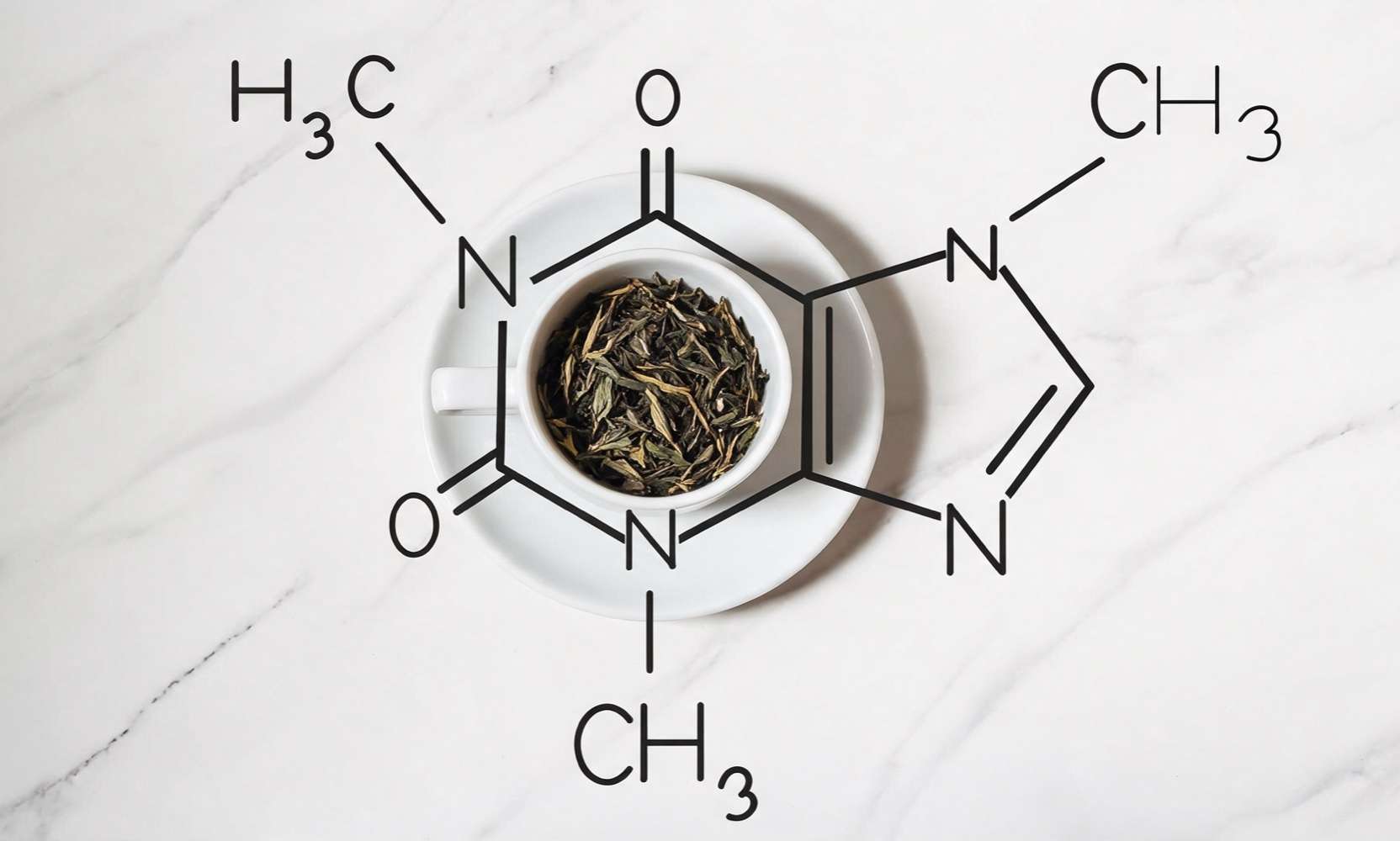
Does Tea Have Caffeine?
Yes, tea can have caffeine—but not every drink we call “tea” does.
The simplest way to understand caffeine in tea is to look at what is actually in your cup.
If your tea contains leaves from the Camellia sinensis plant—the plant used to make black, green, white, oolong and other traditional teas—it naturally contains caffeine.
If your cup is made entirely from naturally caffeine-free herbs, flowers, roots, fruits or other botanicals, it may contain no caffeine at all.
That distinction sounds simple. But once you start comparing black tea to green tea, loose leaf to tea bags, short steeps to long steeps and true tea to herbal blends, the answer becomes much more interesting.
And many of the rules people have been taught about caffeine in tea aren’t as reliable as they seem.
The Short Answer: Does Tea Have Caffeine?
All traditional “true teas” come from the same plant: Camellia sinensis.
That includes:
- Black tea
- Green tea
- White tea
- Oolong tea
- Pu-erh tea
Because the Camellia sinensis plant naturally produces caffeine, all of these teas can contain caffeine.
The amount in your finished cup, however, can vary considerably.
A study that analyzed commercially available white, green and black teas found caffeine levels ranging from 14 to 61 milligrams per serving, with no consistent relationship between the color or category of the tea and its caffeine content.
That is important because it challenges one of the most persistent assumptions about tea:
Black tea is not automatically high in caffeine, and white or green tea is not automatically low in caffeine.
The name on the package tells you how the tea was produced. It does not give you a precise caffeine measurement.
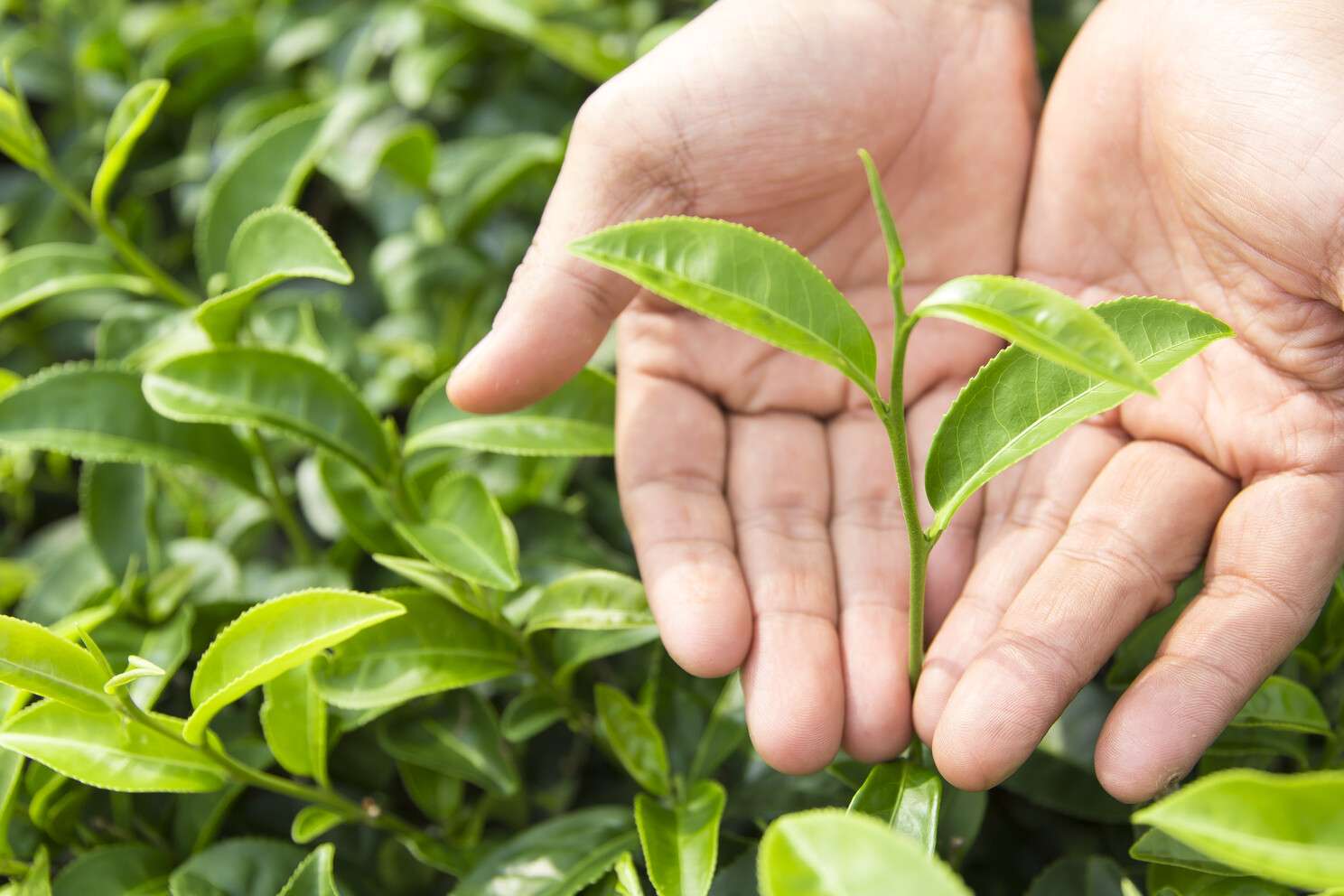
Why Does the Tea Plant Contain Caffeine in the First Place?
Caffeine isn’t something manufacturers have to add to tea.
It occurs naturally within the Camellia sinensis plant.
Caffeine is one of several naturally occurring compounds in tea leaves, alongside polyphenols, amino acids and other plant constituents. The exact chemical composition of a tea can be influenced by the cultivar, growing conditions, season, leaf material, processing and preparation.
That means caffeine is part of the natural complexity of the leaf itself.
When you add hot water, you begin extracting those compounds from the tea into your cup.
And that is where caffeine becomes much less predictable than simply saying “black,” “green” or “white.”
How Much Caffeine Is in Tea?
According to the U.S. Food & Drug Administration, caffeine occurs naturally in plants used to make tea and coffee, and the amount in a particular beverage can vary considerably. The FDA also notes that decaffeinated teas still contain some caffeine.
As a general reference, Mayo Clinic lists approximately:
| Beverage | Typical Caffeine |
|---|---|
| Brewed black tea, 8 oz | 48 mg |
| Brewed green tea, 8 oz | 29 mg |
| Brewed coffee, 8 oz | 96 mg |
| Decaffeinated black tea, 8 oz | 2 mg |
These numbers should be viewed as guidelines rather than guarantees. Mayo Clinic specifically notes that growing conditions and brewing time can affect the amount of caffeine in a cup.
The FDA provides another useful reference point. Its estimates for a 12-ounce serving are about 37 mg for green tea and 71 mg for black tea, while also emphasizing that caffeine levels can vary from product to product.
So when someone asks, “How much caffeine is in tea?” the most accurate answer is:
It depends on both the tea and how you prepare it.
What Determines How Much Caffeine Ends Up in Your Cup?
Several variables matter.
1. The Tea Itself
Different cultivars, growing environments, harvests, leaf grades and manufacturing methods can produce different chemical compositions.
Even two teas that are both labeled “green tea” can produce different caffeine levels.
This is one reason caffeine cannot reliably be predicted from tea category alone. Research examining brewed commercial teas has found substantial variation even within the same general tea type.
2. How Much Tea You Use
This one is easy to overlook.
More tea leaves generally means more material from which caffeine can be extracted.
A heavily loaded infuser and a lightly filled tea bag may both technically produce “one cup of tea,” but those two cups aren’t necessarily chemically equivalent.
3. Steeping Time
Caffeine dissolves into water as tea steeps.
Longer extraction times generally allow more caffeine to move from the leaf into the water.
A recent study examining different tea types at 2-, 5- and 10-minute brewing times found that longer brewing significantly increased caffeine extraction under the conditions studied.
That doesn’t mean you should under-steep a great tea simply to chase a particular caffeine number.
It means your brewing method matters.
4. Water Temperature
Hotter water generally extracts compounds from tea more aggressively than cooler water.
Research has shown that temperature can affect caffeine extraction, although the precise result depends on the tea and brewing conditions being studied.
Again, tea is not a standardized caffeine-delivery system.
It is a botanical infusion.
5. Leaf Size and Form
Whole leaves, broken leaves and finely cut tea do not necessarily infuse at the same rate.
Smaller particles have greater exposed surface area and can release soluble compounds quickly. Research into tea preparation has identified particle size, tea-bag construction and other preparation variables as factors influencing the chemical composition of the finished infusion.
This helps explain why a finely cut tea bag may brew very differently from a large, intact whole-leaf tea.
Does Black Tea Have More Caffeine Than Green Tea?
Sometimes.
But not always.
This is one of the most misleading shortcuts in the tea world.
You will frequently see caffeine charts that place black tea at the top, followed by oolong, green and then white tea. Those averages can be useful as rough consumer guidance, but they should not be treated as a universal law.
In one analysis of 20 commercial teas, researchers found no observable caffeine trend based simply on whether the tea was white, green or black.
Why?
Because the final caffeine level isn’t determined by oxidation alone.
The plant, harvest, leaf material, quantity used, particle size, water temperature and steeping time can all influence what ultimately reaches your cup.
So rather than assuming:
Black = most caffeine
Green = less caffeine
White = least caffeine
it is more accurate to say:
Tea type may provide a general clue, but it cannot tell you precisely how much caffeine you are drinking.
Does Herbal Tea Have Caffeine?
This is where terminology matters.
Technically, beverages made without Camellia sinensis are better described as herbal infusions or tisanes, although almost everyone simply calls them herbal tea.
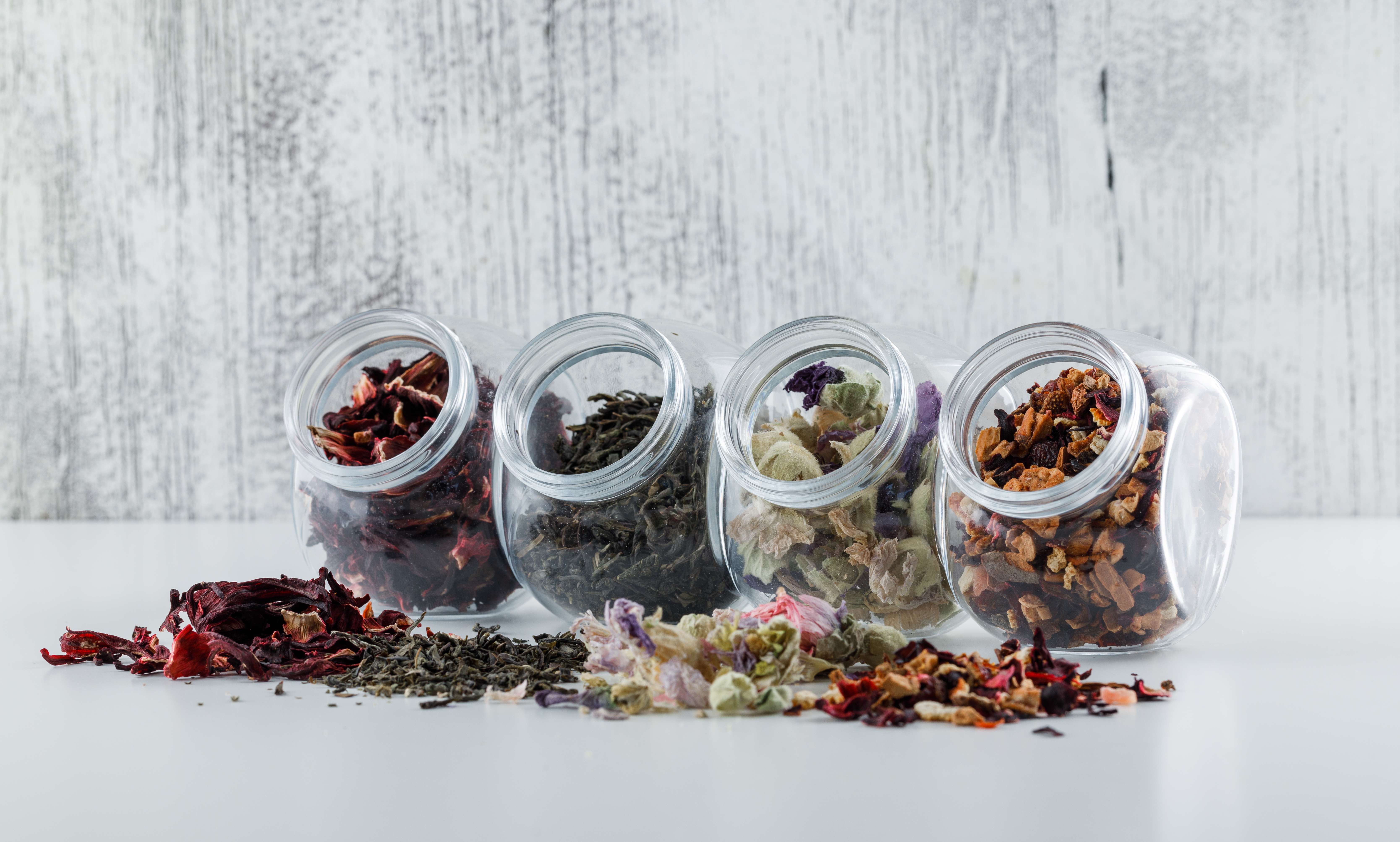
Many common botanicals used in herbal blends are naturally caffeine-free.
Examples include ingredients such as:
- Rooibos
- Chamomile
- Peppermint
- Hibiscus
- Ginger
- Lavender
- Lemon balm
When a blend contains only naturally caffeine-free botanicals, it can provide the ritual and complexity of tea without caffeine from Camellia sinensis.
But there is an important exception:
“Herbal” does not automatically mean caffeine-free.
Plants such as yerba mate naturally contain caffeine, even though they are not Camellia sinensis.
And a botanical blend can also include green tea, black tea or another caffeinated ingredient.
The ingredients matter more than the category name.
Read what’s actually in the blend.
Is Decaffeinated Tea Completely Caffeine-Free?
No.
This is another important distinction.
Decaffeinated does not mean caffeine-free.
The FDA states that decaffeinated coffees and teas contain less caffeine than their regular counterparts but can still contain some caffeine.
Mayo Clinic, for example, lists brewed decaffeinated black tea at approximately 2 mg of caffeine per 8-ounce serving, compared with about 48 mg in regular brewed black tea.
If avoiding caffeine entirely matters to you, a naturally caffeine-free botanical infusion may be more appropriate than relying solely on the word “decaffeinated.”
Can You “Decaffeinate” Tea at Home by Throwing Away the First Steep?
You’ve probably heard this advice:
Steep your tea for 30 seconds, throw away the water, then brew it again. Most of the caffeine will be gone.
It sounds logical.
Unfortunately, tea extraction isn’t that simple.
Research examining repeated infusions shows that meaningful amounts of caffeine can remain available after an initial infusion, and in some brewing conditions later infusions can still contain substantial caffeine.
So a quick rinse may remove some caffeine—but it should not be treated as a reliable method for turning regular tea into caffeine-free tea.
If caffeine avoidance is important, choose ingredients that are naturally caffeine-free or a commercially decaffeinated product rather than trying to remove caffeine in your kitchen.
Is the Caffeine in Tea Different From the Caffeine in Coffee?
Chemically, caffeine is caffeine.
Your body doesn’t recognize “tea caffeine” as a completely different stimulant from “coffee caffeine.”
The FDA specifically notes that the body handles naturally occurring caffeine in tea or coffee the same way it handles caffeine added to a product.
But the beverages themselves are very different.
Tea contains an extraordinarily complex collection of naturally occurring compounds beyond caffeine, including polyphenols and amino acids such as L-theanine.
So while the caffeine molecule is the same, drinking tea is not equivalent to simply dissolving caffeine into water.
The entire botanical composition of the cup matters.
How Much Caffeine Is Too Much?
Caffeine tolerance is highly individual.
Body size, medications, health conditions, pregnancy and personal sensitivity can all affect how someone responds.
For most healthy adults, the FDA cites 400 milligrams of caffeine per day as an amount not generally associated with negative effects.
That is a general guideline—not a target.
Some people can drink tea throughout the day without difficulty. Others may notice that even a relatively modest amount of caffeine affects sleep, causes restlessness or simply doesn’t feel good.
Your cup should work for you.
Wondering whether that caffeine works against your daily fluids? Our guide Does Tea Dehydrate You? covers what the research shows.
So, Does Tea Have Caffeine?
Here is the easiest way to remember it:
If it comes from Camellia sinensis, expect naturally occurring caffeine.
Black tea has caffeine.
Green tea has caffeine.
White tea has caffeine.
Oolong has caffeine.
Pu-erh has caffeine.
But many herbal infusions made from roots, flowers, herbs, spices and other botanicals can be naturally caffeine-free.
And within caffeinated teas, the exact amount in your cup can vary considerably.
That’s why we believe understanding tea begins with understanding what is actually in the blend.
Not merely the name on the front of the package.
At Pure & Easy Tea, we build our blends from real teas, herbs, roots, flowers and botanicals—selecting ingredients with intention rather than relying on added flavorings to create the experience.
Some moments call for the natural lift of tea.
Others call for a completely caffeine-free cup.
The beauty of working with real ingredients is having nature provide both.
The Pure & Easy Minute
This article is part of our Pure & Easy Minute series—60-second answers to questions about tea, botanicals, ingredients and what is really in your cup.
Because understanding what you drink shouldn’t require a chemistry degree.
But it deserves more than a marketing claim.
Pure & Easy Minute
Watch the 60-second version of this article