
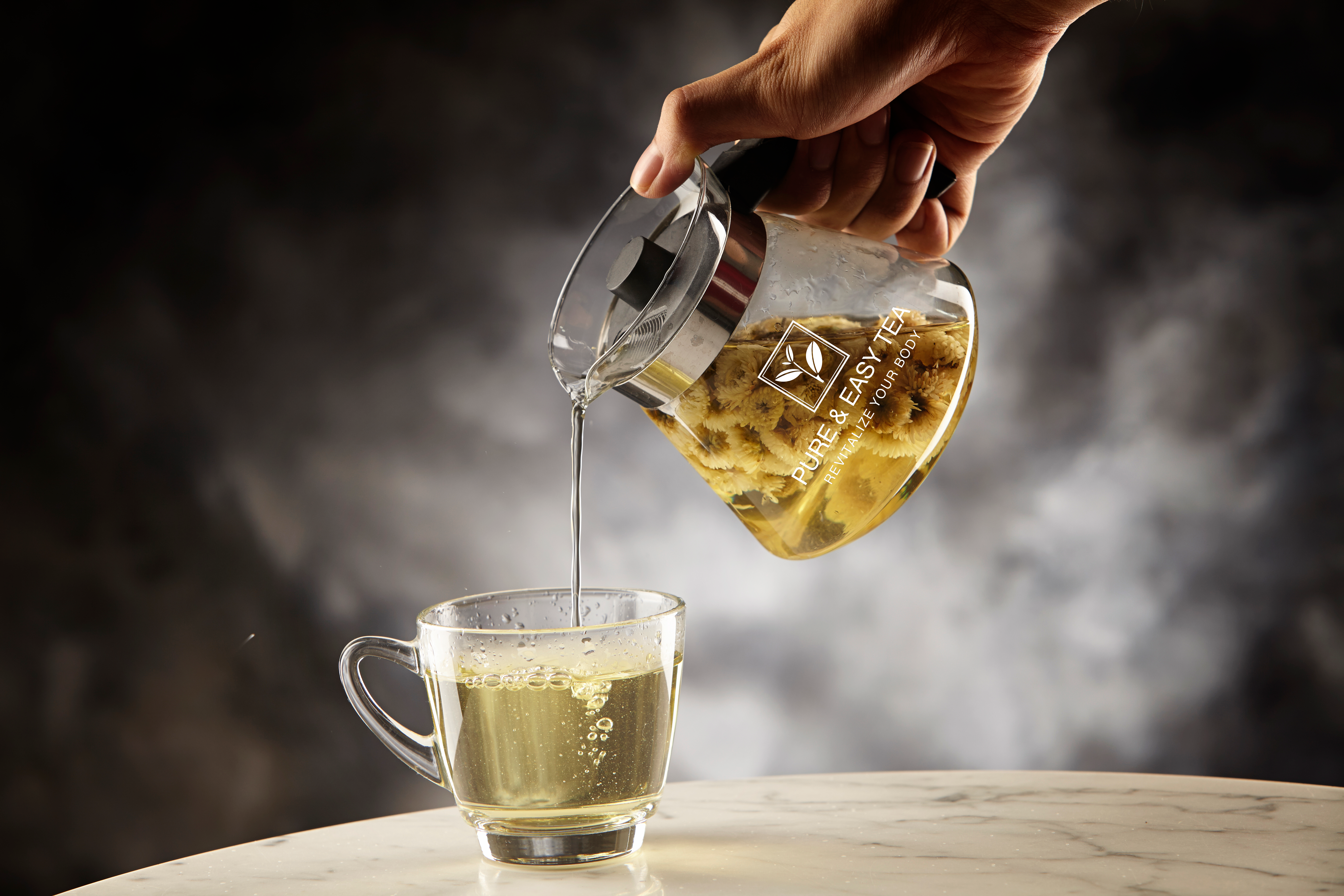
Tea Ritual: From Plants to Water — Nature, Ritual and Intention
Before there is tea, there is water.
It moves through soil and root, through stem and leaf, through blood and cell. Every botanical we steep was once part of a living plant, built and sustained by water. Every cup begins when those two worlds meet again — water and plant, this time not to grow something, but to draw something out.
That meeting is where the tea ritual begins. Not with a claim, but with a question worth sitting with:
If water is going to become part of us, what do we want to put into it?
Plants Are Where We Begin
A tea leaf, a chamomile flower, a curl of ginger root — these aren’t ingredients waiting to be disguised by flavor. They come from living organisms, and living organisms are active, responsive systems.
Plants build and store compounds as they grow: polyphenols in tea leaves, aromatic compounds in lavender, pungent compounds in ginger. These aren’t manufactured after the fact. They develop as the plant does the ordinary, extraordinary work of being alive.
Modern plant biology has also shown that plants communicate internally through electrical as well as chemical signaling. Changes in membrane potential allow information to move through their tissues in response to injury, light and environmental stress. We don’t need to reach for anything mystical to call a plant alive. It already qualifies in the most literal, measurable sense: a living plant is an electrochemical organism.
So are we.
That’s where the kinship between us and what we drink begins — and where every tea ritual really starts.
Then Comes Water
Water is where that kinship becomes physical. Roughly 60% of the adult human body is water, and the plasma carrying our blood cells is itself predominantly water. Every cell depends on it, and nearly every process in the body relies on it.
In the most unglamorous, physiological sense, you are largely the thing you’re about to drink.
Water is also one of nature’s most capable solvents. Its molecular structure allows it to surround and dissolve an enormous range of compounds, which is precisely why steeping works at all. Water isn’t simply a vehicle for tea. It participates in the transformation.
At its simplest, a tea ritual is an interaction between plant, water, time and attention.
What Actually Happens When Tea Steeps
Pour hot water over a whole botanical and something genuinely interesting happens. Heat increases molecular motion, speeds diffusion and helps water penetrate plant tissues, allowing soluble compounds to move from the botanical into the cup. Polyphenols, pigments, sugars, organic acids and aromatic molecules begin to migrate into the water.
Color shifts. Aroma lifts. Flavor develops, layer by layer, as different compounds move at different rates and temperatures. Our brewing guide covers the specific times and temperatures that make the most of that process for each blend.
This is the quiet chemistry behind a simple idea: water doesn’t need to invent anything. Give it a leaf, and it draws from the leaf. Give it a flower, and it draws from the flower. Give it a root, a fruit or a spice, and slowly their character moves into the cup.
The water reveals what was already there.
That extraction is the physical foundation of every tea ritual.
That’s not merely a metaphor. It’s how steeping works. And it also happens to describe what “nothing added” means to us — you can read more about that standard on our What Is Pure Tea page.
We don’t ask flavoring to tell the water what strawberry should taste like. We put strawberry into the water and let the plant speak for itself.
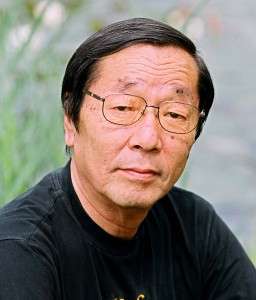
The Emoto Question
It’s difficult to talk about water and intention without eventually encountering Masaru Emoto.
In the late 1990s, the Japanese author and researcher became known around the world for photographs suggesting that words, music and human intention could influence the appearance of frozen water crystals. Images associated with words such as “love” and “gratitude” were often shown as symmetrical and beautiful, while those associated with negative words appeared fragmented or irregular.
His work became both famous and controversial. Emoto’s broader conclusions have never been established by mainstream science. He later co-authored a double-blind pilot study that reported a modest difference in how independent judges rated crystals formed from intention-treated water, and a later triple-blind experiment reported a similar result.
Those findings are intriguing, but they are far from proof that thoughts or words restructure water. The evidence remains limited, and the larger claim — that words spoken to water alter its molecular structure — sits well outside mainstream scientific acceptance.
We aren’t going to resolve that question here. But perhaps the most enduring value of Emoto’s work wasn’t the answer he believed he had found. It was the question underneath it:
Should we be more intentional about our relationship with water — and with what we consume?
What Science Can Say About Intention
Here, the ground becomes much firmer.
Even setting Emoto’s specific claims aside, substantial research shows that attention, expectation and ritual can shape human experience. Framing and expectation can influence how food and drink taste. A tea ritual — like other small, deliberate sequences performed before eating or drinking — can influence enjoyment, attention and perceived value.
Research into ritual, expectation and placebo effects points toward a much more defensible idea:
Intention doesn’t need to alter a molecule to matter. It can alter the person forming it.
That’s a very different claim from Emoto’s, and a much better-supported one.
Words and ritual don’t need to talk to water. They need to talk to us.

Revitalize Your Body
Which brings us to three small words etched into borosilicate glass:
Revitalize Your Body.
We don’t know that words etched into a glass can change the water inside it. We do know they can influence the person holding it.
Every time the mug is lifted, those words are there — not as an incantation, but as a prompt. A small interruption in an otherwise automatic moment.
What am I putting into myself? Why am I doing this? Can this next ten minutes be more intentional than the last?
That is what turns drinking tea into a tea ritual: not complexity, but attention.
Plants → Water → You
Start with a plant. Add water — the same element that sustained it as it grew and sustains us now. Give the two time together, and something begins to move from one into the other: color, aroma, flavor, character.
Then bring your own intention to the cup. That is the tea ritual in its simplest form.
That’s the quiet architecture behind Tea As It Was Meant To Be.
Nothing needs to imitate nature because we began with nature. The leaf is real. The fruit is real. The flower is real. The water draws from what is actually there.
And through clear borosilicate glass, you can watch it happen.
Etched into that glass are three words:
Revitalize Your Body.
Not a promise to the water.
A reminder to you.
Plant. Water. You.
Choose what enters the cup. And choose it with intention — that’s the whole tea ritual, distilled to three words.
At Pure & Easy Tea, that philosophy guides everything we make. We begin with whole botanicals, thoughtfully selected and blended without added flavorings, so the water can draw from what is actually there. From the tea itself to the glass you brew it in, our goal is simple: make each cup a more intentional return to nature.
Tea As It Was Meant To Be.
Keep reading