
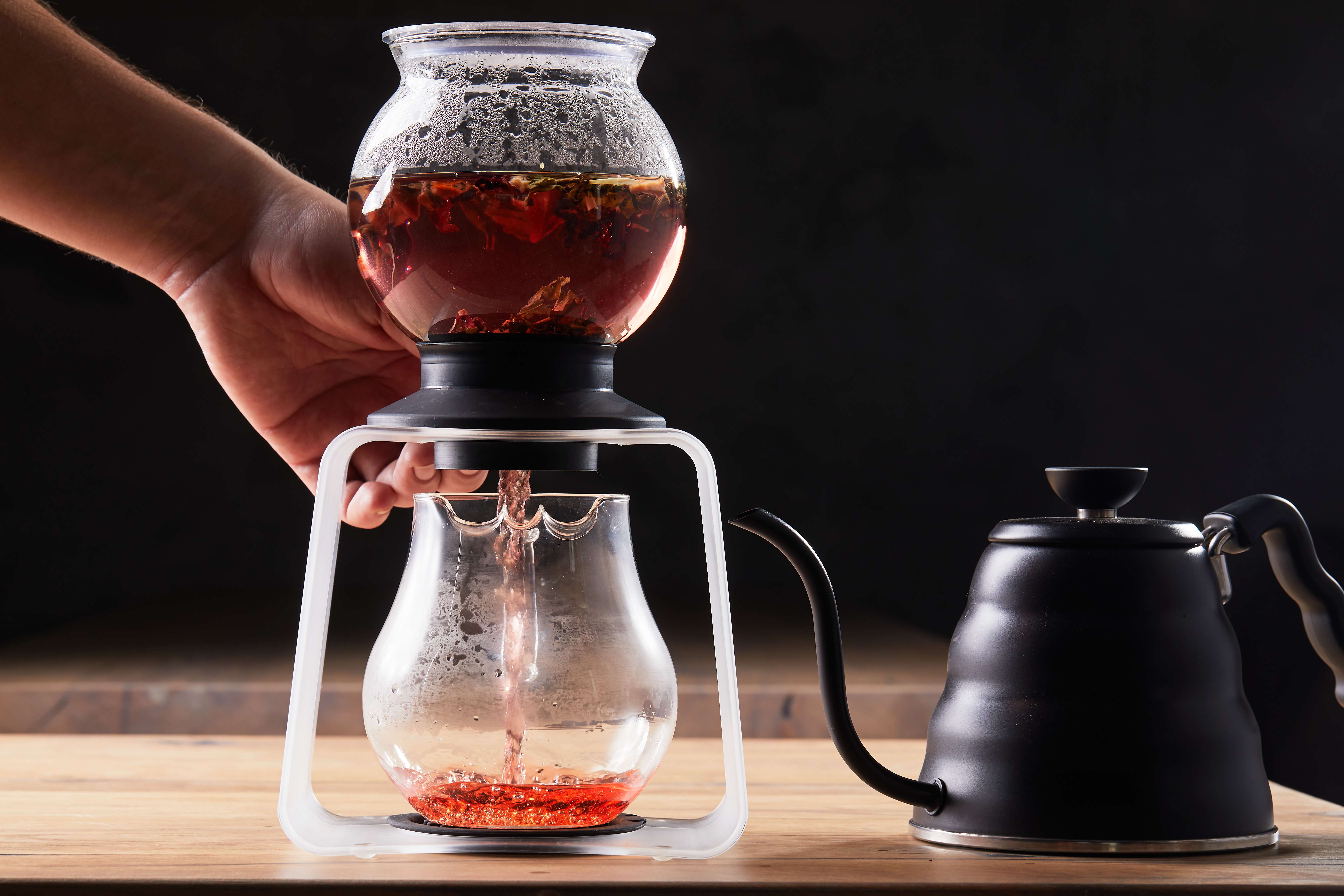
Microplastics are everywhere plastic gets hot — including your teacup.
You wouldn’t drink water from a bottle left in a hot car. But that’s essentially what happens every time you steep tea in the wrong vessel.
Hot water doesn’t just extract flavor from what it touches. It extracts everything — microplastics included.
I watched The Plastic Detox recently. If you haven’t seen it, here’s the short version: six couples struggling with unexplained infertility work with Dr. Shanna Swan, one of the world’s leading environmental and reproductive epidemiologists, to reduce their exposure to plastics and other environmental chemicals.
By the end of the documentary, three of the couples conceive.
That’s the headline everyone talks about.
But it wasn’t what stayed with me.
What stayed with me was something much bigger.
It was the realization that plastic has quietly become part of nearly everything we do. It’s in our food packaging, our storage containers, our water bottles, our takeout cups, and countless other products we use every day. Most of us never think twice about it because it has become so normal.
Then I started thinking about heat.
Heat changes everything.
Researchers have found that plastic materials release significantly more microplastic and nanoplastic particles when exposed to hot temperatures. The hotter the liquid, the greater the potential for microplastics to migrate from the container into what we’re consuming.
For context, tea is typically brewed between 80°C and 100°C.
In other words, tea brewing creates exactly the conditions where material choice matters most — and where microplastics have the most opportunity to migrate.
This isn’t fringe science. It’s an area of research that continues to grow as scientists learn more about how plastics behave under real-world conditions. While many people focus on what they eat and drink, far fewer think about what those foods and beverages come into contact with before they reach the body.
The tea industry has its own blind spot.
Tea enthusiasts spend a lot of time discussing sourcing, quality, harvests, processing methods, whole leaves versus tea dust, and whether ingredients are natural or artificial.
All of those things matter.
But if you want to escape microplastics in tea, you must be aware that the vessel matters too.
Researchers have raised concerns about certain tea bags, plastic-lined brewing systems, and synthetic materials exposed to steeping temperatures. Even the highest-quality tea can end up interacting with materials that were never intended to hold near-boiling water.
That’s one of the reasons we chose borosilicate glass.
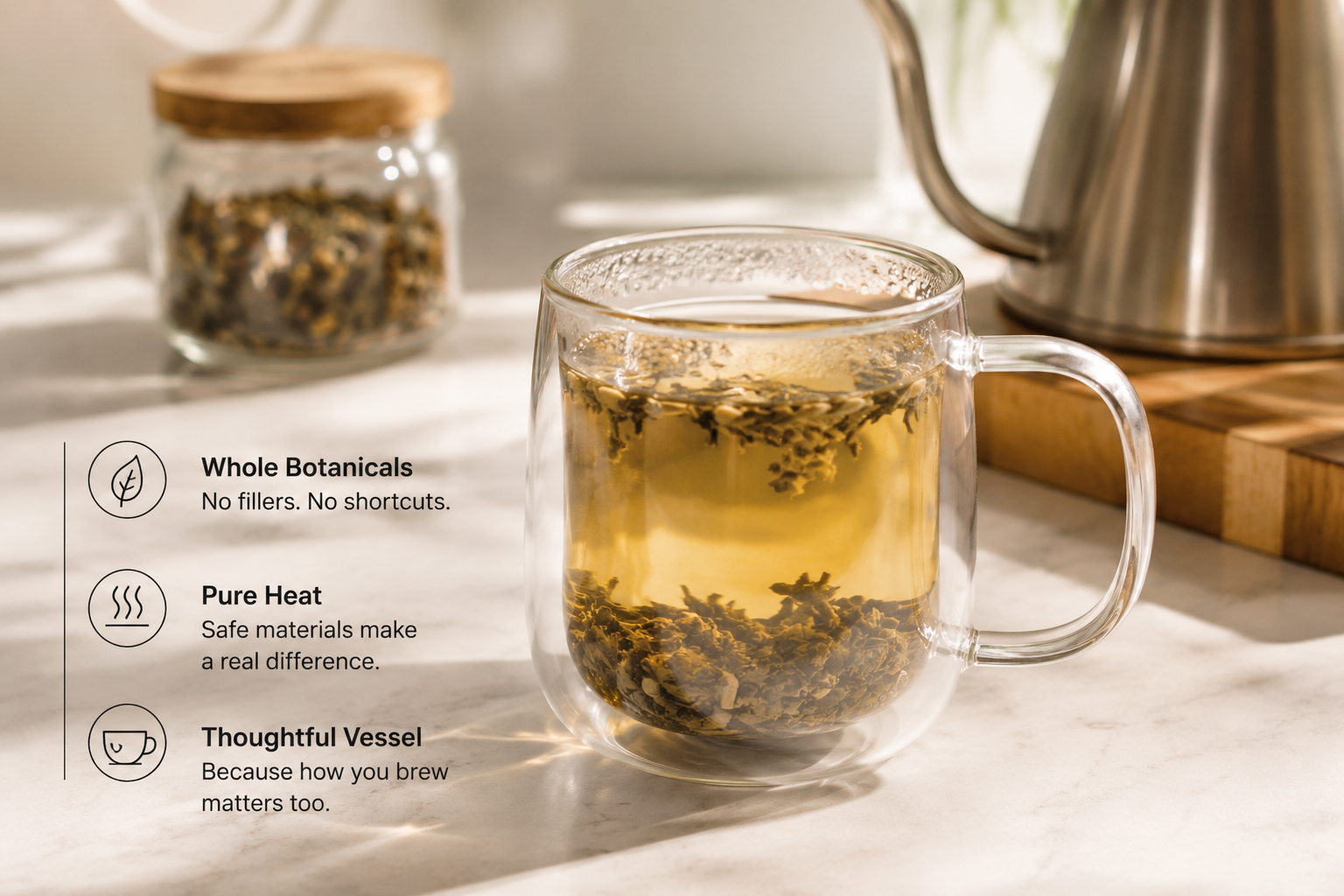
At Pure & Easy Tea, we spend an enormous amount of time thinking about ingredients. Every blend is built from whole botanicals with no artificial flavorings, fillers, or unnecessary additives.
Eventually, we realized that philosophy shouldn’t stop with the tea itself.
It should extend to the brewing experience.
Glass doesn’t need a plastic liner. It doesn’t require synthetic coatings. It allows you to see the ingredients, watch them unfurl, and enjoy the ritual exactly as nature intended — with no microplastics migrating in.
For us, brewing in glass wasn’t a marketing decision.
It was the logical conclusion of everything we already believed.
If you’re going to make a conscious choice about what goes into your body, it makes sense to think about what it passes through first.
Microplastics Awareness
So here’s my challenge.
Watch The Plastic Detox.
Then take a look around your kitchen.
Look at your water bottle.
Look at your food containers.
Look at your coffee cup or tea mug.
Ask yourself a simple question:
What happens when heat meets the materials I’m using every day?
You may decide nothing needs to change.
Or you may discover that some of the simplest improvements to your wellness routine have nothing to do with what you’re consuming and everything to do with how you’re consuming it.
We spend so much time thinking about what goes into our bodies.
Maybe it’s time we thought a little more about what it passes through first — and how many microplastics are riding along.
Prefer the One-Minute Version?
Watch Episode 11 of The Pure & Easy Minute: Do Tea Bags Still Release Microplastics?
See all Pure & Easy Minute episodes »
About Pure & Easy Tea
Pure & Easy Tea is built on a simple belief: every ingredient should be identifiable, intentional, and worthy of being on the label. Our blends are crafted from whole leaves, herbs, fruits, and botanicals—never natural flavors—allowing the ingredients themselves to tell the story.
Learn more at PureAndEasyTea.com
Keep reading