
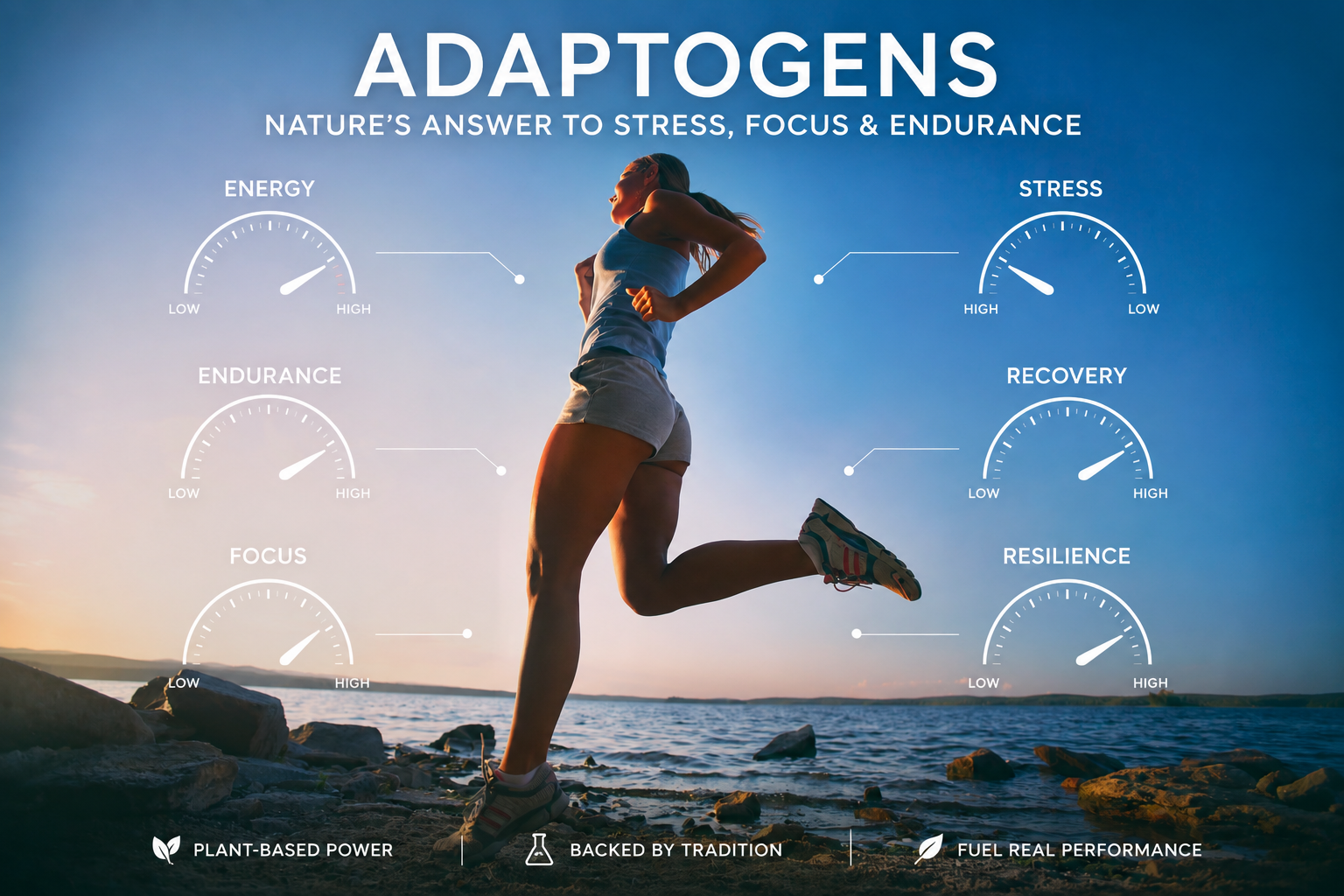
What Are Adaptogens?
Adaptogens are a unique class of botanicals traditionally used to help the body adapt to physical and mental stress—supporting endurance, focus, and resilience under pressure.
The term is new to most people.
The plants are not.
Across Asia and Eastern Europe, certain herbs, roots, and berries earned their reputation centuries ago, valued for helping people maintain stamina, recover from exertion, and perform at their best when the demand was highest.
Athletes—and anyone competing against the clock or against themselves—have always searched for an edge.
A little more endurance when the day runs long.
A little more focus when fatigue begins to set in.
A little more resilience when the mind is pushed beyond its comfort zone.
Today, that edge usually comes in a brightly colored bottle filled with sugar, artificial flavoring, and ingredients engineered in a laboratory.
Long before sports drinks existed, high-performance cultures looked to nature instead.
Among the most respected botanicals they found were adaptogens.
How Do Adaptogens Work?
Adaptogens are believed to support the body’s ability to hold steady under physical and mental demand.
Unlike stimulants, which deliver a sharp spike followed by an inevitable crash, adaptogens have traditionally been valued for something different: sustained performance over time.
Rather than forcing a response, they are thought to help the body adapt to whatever the moment requires. That’s where the name comes from.
While dozens of botanicals are considered adaptogens, three of the most respected are Ashwagandha, Schisandra Berry, and Eleuthero.
Each has a long history of traditional use in supporting stamina, resilience, and overall vitality during periods of increased physical and mental demand.
Why Adaptogens Matter More Than Ever
The common response to a demanding day is the same one athletes have relied on for decades: reach for something fast.
A canned drink before the match.
A second coffee through the back nine.
Something to push through the next two hours instead of building the stamina to meet them.
More caffeine.
More sugar.
More stimulation.
Yet sustained performance requires something more.
The ability to stay focused when concentration begins to drift.
The ability to stay composed when pressure begins to build.
The ability to continue performing when fatigue starts to appear.
This is why adaptogens continue to attract the attention of athletes, professionals, and health-conscious consumers alike.
Not because they’re new.
Because they’re enduring.
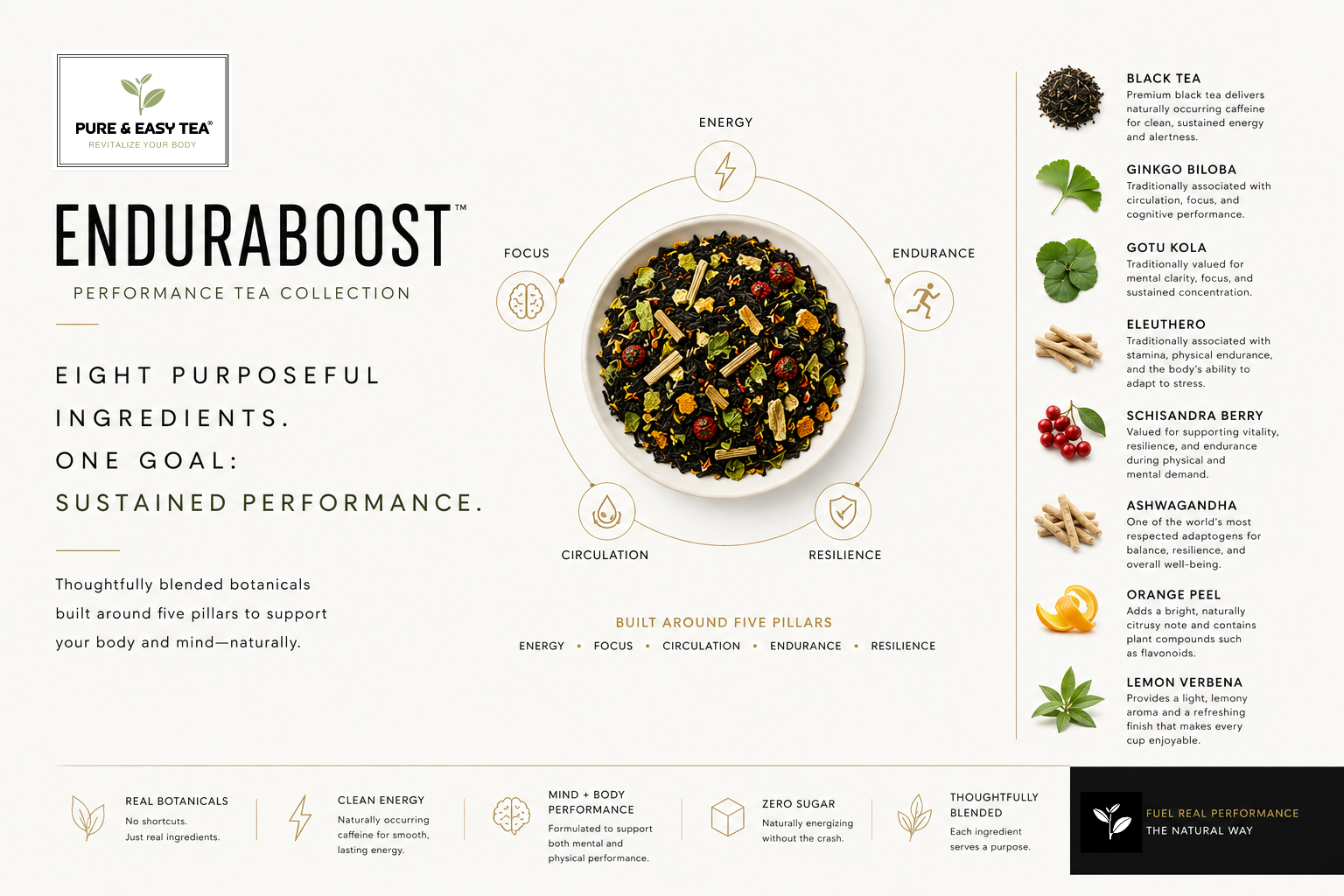
Adaptogens in Practice: The EnduraBoost Approach
At Pure & Easy Tea, we wanted to explore what a modern performance beverage might look like if it were built around real botanicals instead of sugar.
That’s what led to the creation of EnduraBoost.
At the heart of the blend are three adaptogens.
Eleuthero
Traditionally associated with stamina and physical endurance, Eleuthero has been valued for generations by those seeking support during periods of sustained activity.
Schisandra Berry
Known as the “five-flavor fruit,” Schisandra has long been used to support vitality and resilience during physical and mental challenges.
Ashwagandha
One of the world’s most recognized adaptogens, Ashwagandha remains widely respected for supporting balance and overall well-being.
Together, these three botanicals form the adaptogenic foundation of EnduraBoost.
But adaptogens are only part of the story.
Most adaptogen products stop there.
We didn’t.
Because performance isn’t driven by a single ingredient category. It requires energy, focus, circulation, endurance, and resilience working together.
Five additional botanicals complete the blend, each carrying its own purpose.
Premium Black Tea provides naturally occurring caffeine for clean energy.
Ginkgo Biloba has long been valued for its association with healthy circulation and cognitive function.
Gotu Kola has been used for centuries to support mental clarity and concentration.
Orange Peel and Lemon Verbena contribute a bright, refreshing finish that makes the tea remarkably enjoyable both hot and iced.
Together, all eight pure ingredients create a performance tea built around five essential pillars:
Energy. Focus. Circulation. Endurance. Resilience.
Every ingredient serves a purpose.
Nothing was added to imitate a flavor that isn’t really there.
No artificial flavoring systems.
No sweeteners.
Just real botanicals working together in a carefully crafted blend.
Beyond Quick Energy
Most sports drinks are designed around a simple idea: deliver energy fast.
For some situations, that’s enough.
But many of life’s most demanding pursuits require something more.
Consider the activities that test us most.
A long tennis match that stretches into a deciding set.
Eighteen holes of golf where the final few holes often matter more than the first few.
A cycling route that pushes beyond expectations.
A chess tournament where concentration cannot waver.
A demanding workday that requires mental sharpness from the first meeting to the last.
These challenges aren’t won in the opening moments.
They’re won hours later.
When focus begins to fade.
When fatigue begins to build.
When resilience becomes the deciding factor.
That’s why so many athletes are beginning to look beyond products designed solely for quick energy and toward ingredients traditionally associated with sustained performance.
A Better Way to Fuel Performance
The modern performance industry has largely convinced us that better performance comes from more.
More caffeine.
More sugar.
More ingredients.
Adaptogens suggest a different philosophy:
Sustained performance begins with supporting the body, not overwhelming it.
That’s why these botanicals have remained relevant for centuries.
And it’s why they continue to earn the attention of athletes, professionals, and wellness-minded individuals today.
At Pure & Easy Tea, that philosophy inspired the creation of EnduraBoost.
Three respected adaptogens.
Eight purposeful botanicals.
Zero sugar.
Because performance isn’t measured by how you start.
It’s measured by how you finish.
Related Articles
Keep reading