
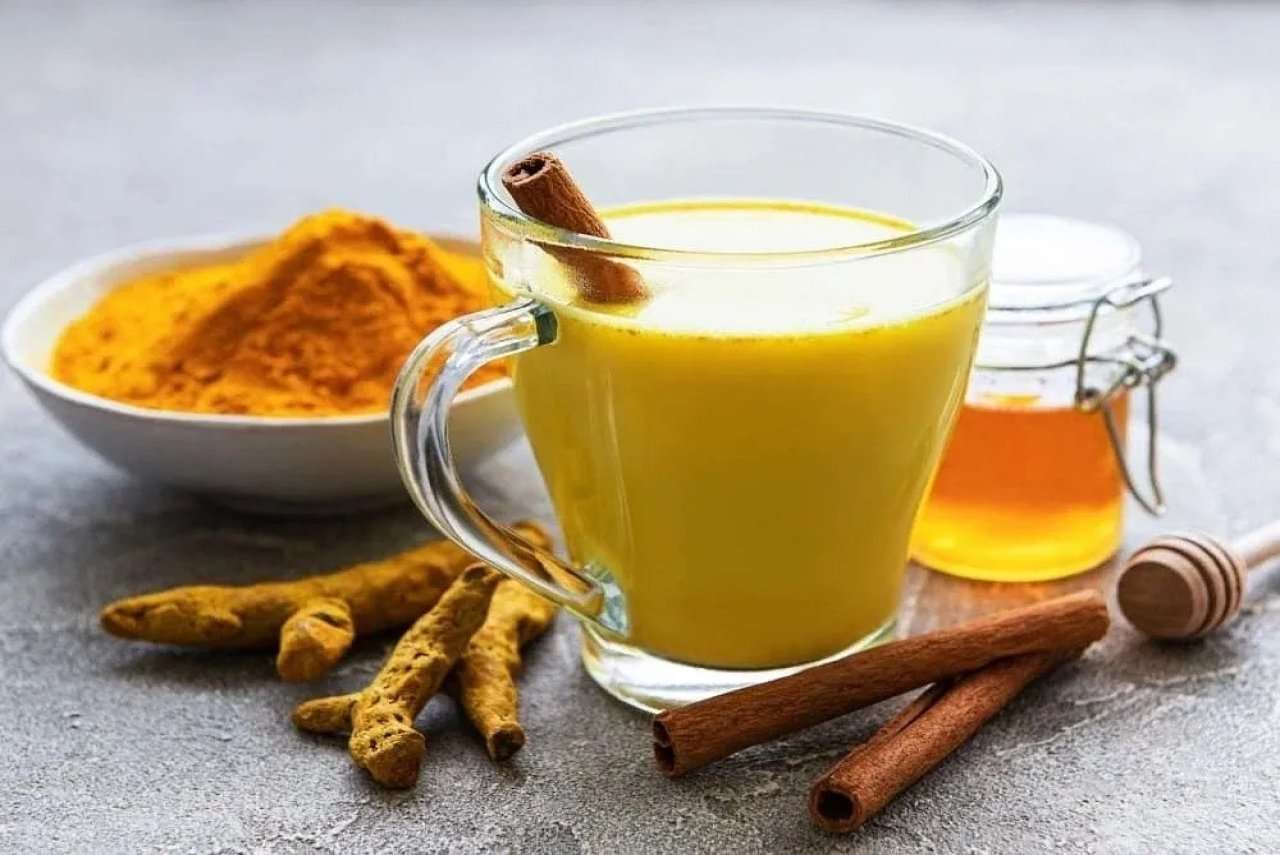
Turmeric is one of the most talked-about botanicals in wellness, and also one of the most misunderstood. Most of what circulates about turmeric tea — a teaspoon of powder stirred into hot water, a pinch of black pepper thrown in because someone read it helps — treats the root as a shortcut rather than what it actually is: a complex rhizome whose benefits depend heavily on how it’s prepared, paired, and absorbed. Understanding turmeric properly changes how you think about drinking it.
What Turmeric Actually Is
Turmeric (Curcuma longa) is a rhizome in the ginger family, native to South and Southeast Asia, where it has been used in cooking and traditional medicine for thousands of years. Its color — the deep, saturated gold that stains everything it touches — comes from curcuminoids, a family of compounds that also carry most of turmeric’s studied effects. Curcumin is the most abundant and most researched of these, typically making up around 2-5% of the raw rhizome by weight.
This matters for a simple reason: a weak turmeric tea, brewed briefly with a small pinch of powder, is mostly delivering flavor and color, not a meaningful dose of curcumin. Getting real benefit from turmeric tea requires understanding both concentration and absorption — not just tossing turmeric into water.
The Bioavailability Problem
Curcumin has a well-documented weakness: the body doesn’t absorb it efficiently on its own. It’s metabolized quickly and cleared from the bloodstream before much of it can be used. This is the single most important thing to understand about turmeric tea, and it’s why so many recipes online instinctively reach for black pepper.
Piperine, the compound responsible for black pepper’s sharpness, has been shown to significantly slow curcumin’s metabolism, allowing more of it to remain active in the body. Fat also plays a role — curcumin is fat-soluble, which is part of why golden milk recipes (turmeric simmered in dairy or a plant-based milk) have persisted for generations; the fat helps carry it. Heat and steep time matter too. A quick dunk of turmeric in lukewarm water extracts far less than a proper simmer or a full steep at near-boiling temperature.
None of this means turmeric tea needs to be complicated. It means the difference between a cup that does something and a cup that’s just yellow water comes down to a few specific choices: concentration, steep time, and what it’s paired with.
Turmeric’s Traditional Role
Long before curcumin had a name, turmeric held a defined place in Ayurvedic and traditional Chinese medicine — used for digestive comfort, for soothing the throat, and worked into remedies for the early stages of illness. Modern research on anti-inflammatory and antioxidant activity has, in many ways, caught up to uses that were already centuries old. What’s changed is precision: we now understand why certain traditional pairings — turmeric with ginger, turmeric with black pepper, turmeric with citrus — worked as well as they did.
What Makes Turmeric Tea Worth Doing Properly
A few principles separate a turmeric tea that’s worth drinking from one that’s mostly ritual:
Whole-leaf and whole-root over powder alone. Powdered turmeric loses volatile compounds over time, especially once exposed to light and air. Blends built around whole or coarsely cut turmeric root retain more of their character and potency.
A real steep, not a stir. Turmeric needs time in hot water — closer to 4-5 minutes than a quick 60-second dip — to extract properly, particularly when it’s part of a blend with other botanicals that release at different rates.
A pairing that supports absorption or purpose. Black pepper for bioavailability. Ginger for warmth and digestive synergy. Citrus for brightness that cuts turmeric’s natural earthiness. The right pairing isn’t decorative — it changes what the cup actually does.

How We Use It: Turmeric in Soothe
This is the thinking behind Soothe, our whole-leaf blend built around turmeric rather than a single-note infusion. Turmeric is paired with licorice root, ginger, eucalyptus, echinacea, and dried orange — a formulation designed for a specific moment: the onset of a cold, an irritated throat, a long travel day. Licorice root lends natural sweetness so the cup needs no added sugar. Ginger works alongside the turmeric rather than competing with it. Eucalyptus adds the cooling, clearing quality most turmeric tea recipes skip entirely. Echinacea rounds it out as a genuinely immune-focused botanical, not just a comfort one.
It’s caffeine-free, brewed for 4-5 minutes in water just off the boil, and best enjoyed in glass — we use borosilicate exclusively — so you can watch the color develop as the botanicals release.
Frequently Asked Questions
Does turmeric tea actually work, or is it mostly hype? Curcumin, turmeric’s primary active compound, has real research behind its anti-inflammatory and antioxidant properties. The caveat is absorption — curcumin is poorly bioavailable on its own, so pairing (black pepper, fat, or complementary botanicals) and proper steeping matter as much as the turmeric itself.
Why does turmeric tea often include black pepper? Piperine, the compound in black pepper, has been shown to significantly improve curcumin’s absorption in the body. Without it, much of turmeric’s benefit passes through largely unused.
How long should turmeric tea steep? 4-5 minutes in water just off a rolling boil extracts meaningfully more than a quick stir, especially when turmeric is blended with other botanicals like licorice root or echinacea that release more slowly.
Is turmeric tea caffeine-free? Turmeric itself contains no caffeine. Whether a specific blend is caffeine-free depends on its other ingredients — Soothe, for example, has no black or green tea base, making it caffeine-free.
What’s the difference between turmeric powder and whole turmeric root in tea? Powder is convenient but loses potency over time as volatile compounds degrade with light and air exposure. Whole or coarsely cut turmeric root, used in proper whole-leaf blends, retains more of their original character.
Keep reading