
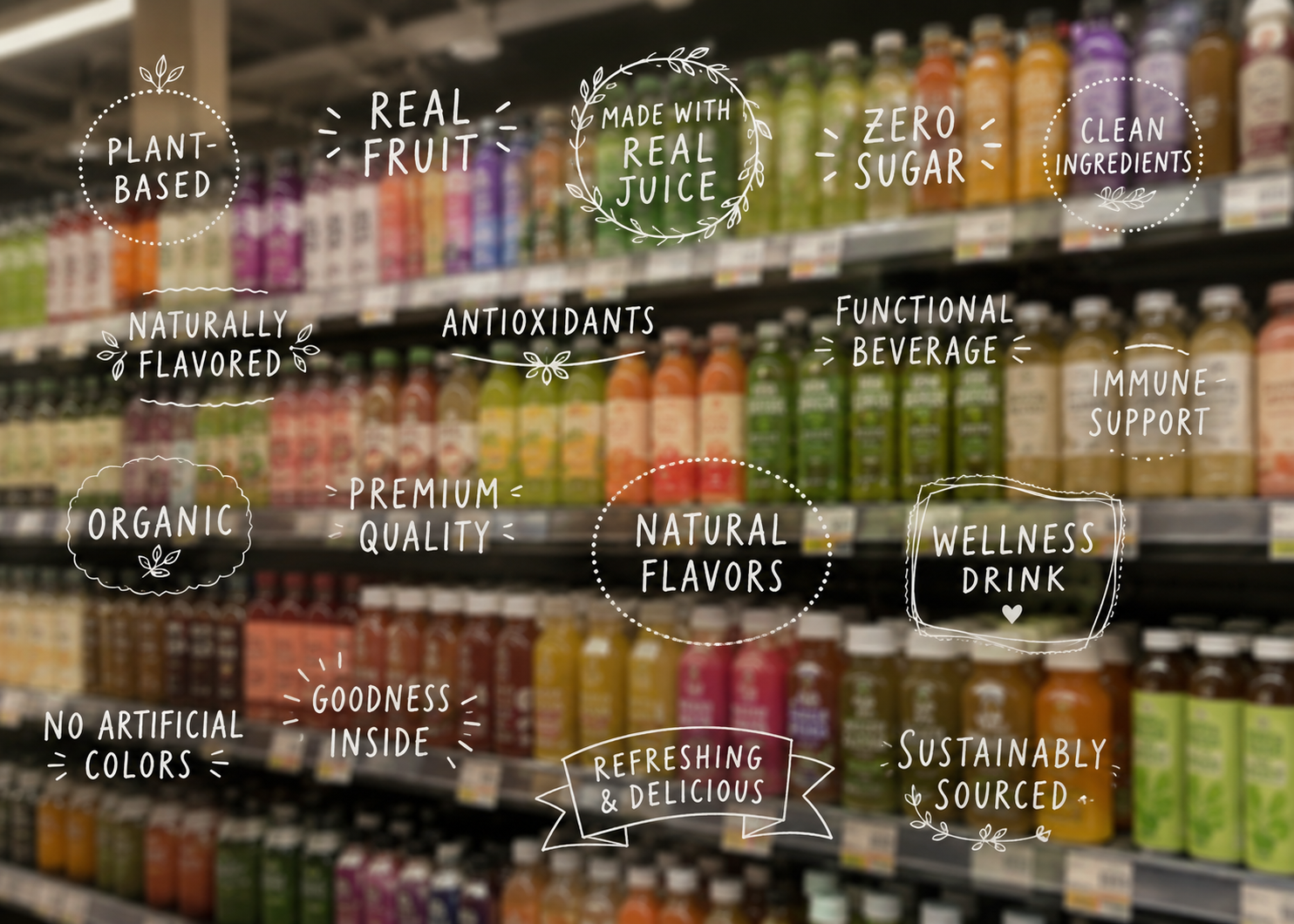
Consumers aren’t asking whether a product is organic anymore. They’re asking a harder question: What exactly is this?
“Natural flavors” appears on millions of beverage labels every day, yet few consumers know what those two words actually mean. To understand why they’re attracting more attention, it helps to remember what tea looked like before flavor became something that could be engineered.
There is a particular kind of quiet that happens in the ninety seconds before tea is ready.
The kettle stills. Steam rises from a borosilicate glass mug in a thin, visible column. Full leaves—not dust, not fragments, not a paper sachet concealing what’s inside—begin to unfurl, releasing color first and flavor second. You can watch the transformation happen. Nothing is hidden. Nothing is manufactured in the final moments to imitate a taste the ingredients never possessed.
For centuries, this was simply what tea was.
Today, that level of ingredient clarity is surprisingly rare.
Walk through almost any grocery store and you’ll find beverages promising peach, blueberry, vanilla, blood orange, chai, pumpkin spice, mango, and countless other flavors. In many cases, the ingredient featured on the front of the package contributes little—or none—of the flavor consumers actually experience.
Instead, much of that taste comes from two remarkably ordinary words tucked quietly into the ingredient panel.
Natural Flavors.
Most people read past them.
Perhaps they shouldn’t.
Why Consumers Are Reading Ingredient Labels More Closely
Ten years ago, premium food was defined by one question.
Is it organic?
Then came another.
Is it clean?
Today, consumers are asking something different.
What exactly is this?
That question reaches far beyond tea.
It’s being asked about supplements.
About cosmetics.
About ultra-processed foods.
About plastic food packaging.
About microplastics.
About ingredient sourcing.
Consumers aren’t demanding perfection.
They’re demanding disclosure.
The next generation of premium brands won’t simply be judged by what they sell.
They’ll be judged by how completely they’re willing to explain it.
 The ingredient label has quietly become one of the most important conversations in food and beverage.
What Does “Natural Flavors” Really Mean?
Despite its reassuring name, “natural flavors” is not a recipe.
It’s a legal ingredient category.
Under U.S. food regulations, those two words can legally represent a proprietary blend containing more than 100 individual compounds—including flavor molecules, solvents, emulsifiers, preservatives, and stabilizers—without requiring manufacturers to list those individual components on the ingredient panel.
For companies, that protects proprietary formulations.
For consumers, it often answers very few questions.
It’s important to separate disclosure from safety.
The fact that a flavor blend isn’t fully disclosed does not mean it’s unsafe.
But it does mean the consumer cannot independently determine exactly what’s inside.
It gets even more surprising.
Many ingredients used in flavor systems can reach the marketplace through the Generally Recognized as Safe (GRAS) framework, allowing manufacturers to determine an ingredient is safe without the FDA reviewing it first. That doesn’t mean the ingredient is unsafe—it means the company, rather than the agency, can make the initial safety determination.
There is one important exception.
If a natural flavor contains a major allergen—milk, soy, wheat, peanuts, tree nuts, eggs, fish, or shellfish—it must be disclosed by law.
Beyond that, ingredient disclosure becomes remarkably limited.
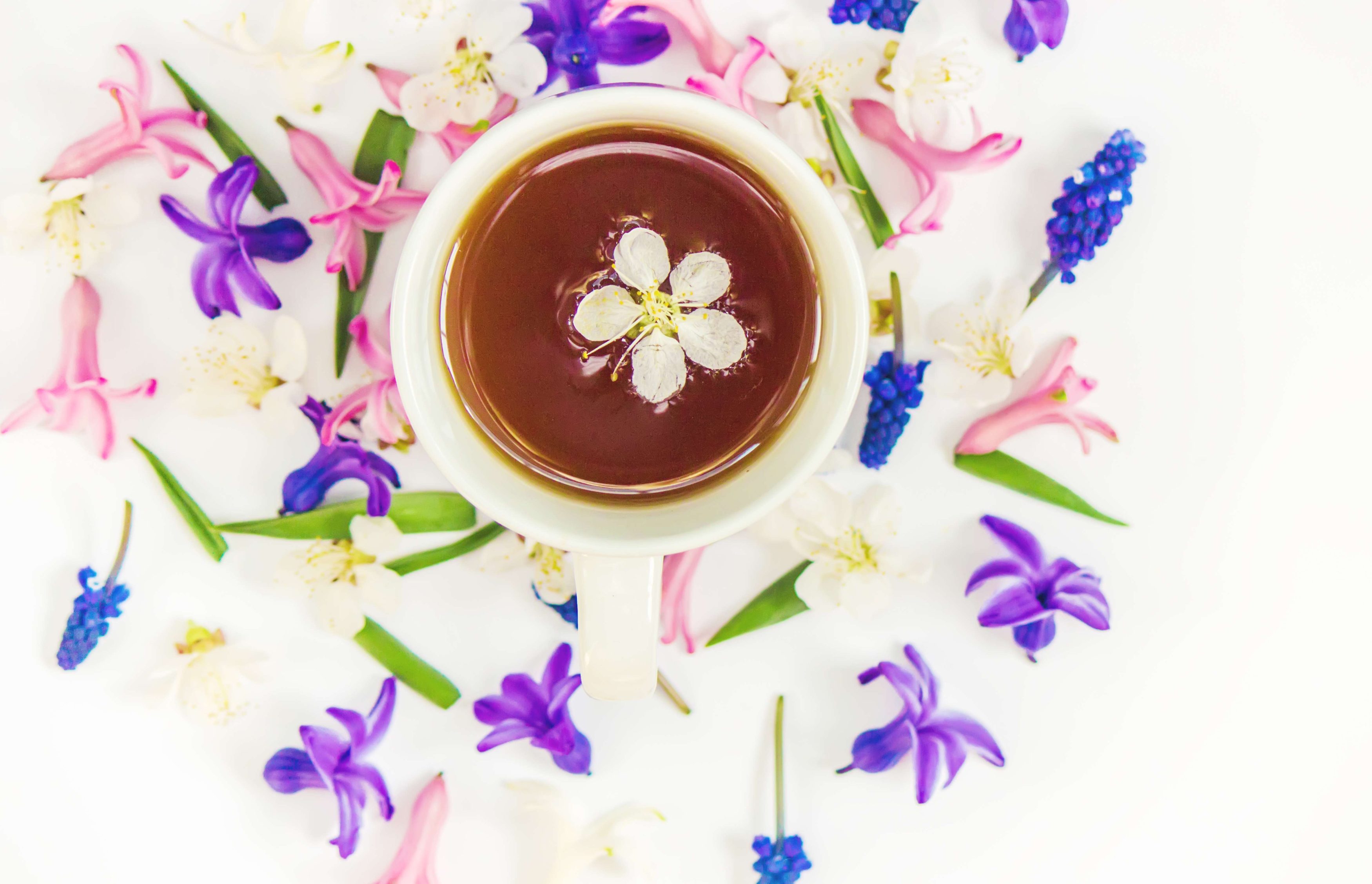 For centuries, flavor came from ingredients that could be seen, identified, and named.
When Flavor Became More Important Than Ingredients
For most of tea’s history, flavor came from ingredients.
If a blend tasted like jasmine, jasmine created that flavor.
If it tasted like citrus, citrus peel was in the cup.
If it carried floral notes, flowers earned them.
Over time, much of the beverage industry began asking a different question.
Instead of asking:
What ingredients create this flavor?
The question increasingly became:
How can this flavor be recreated consistently?
That subtle shift changed an entire industry.
Traditional tea asked:
- Leaf
- Flower
- Fruit
- Root
Many modern flavored beverages ask:
- Flavor system
- Stabilizer
- Emulsifier
- Coloring
- Sweetener
- Preservative
Flavor gradually became the product.
Ingredients became secondary.
Now that relationship appears to be reversing.
Consumers increasingly want to understand not just how something tastes—
—but why it tastes that way.
One Conversation, Many Questions
Natural flavors are only one example.
The broader movement is about disclosure.
It’s the same reason consumers are asking whether plastic tea bags shed microplastics.
It’s why they want to know where coffee was grown.
Why olive oil producers proudly identify their estates.
Why wine lists celebrate provenance.
Why supplement companies are increasingly expected to verify what’s inside the bottle.
These aren’t separate stories.
They’re different expressions of the same cultural shift.
Consumers no longer assume premium products deserve automatic trust simply because they’re marketed as premium.
They increasingly expect the label to explain itself.
 Tea has always been a ritual. Increasingly, guests expect the ingredients to be as intentional as the experience itself.
The Blind Spot in Luxury Hospitality
Luxury hospitality has perfected provenance.
Guests know where the coffee was grown.
Who produced the olive oil.
Which vineyard supplied the wine.
Even the mattress often has a story.
Tea remains one of the last blind spots.
A premium stay can still end with a paper sachet containing ingredients the guest cannot identify, sitting beside a menu that names the farm the eggs came from.
The contrast is becoming difficult to ignore.
Not because the tea is necessarily poor.
Because it no longer reflects the same standard of disclosure expected everywhere else.
Hotels that recognize this shift won’t simply serve better tea.
They’ll reinforce the philosophy already reflected throughout the rest of the guest experience.
Where Pure & Easy Tea Fits
We didn’t build Pure & Easy Tea to criticize an industry.
We built it around a different assumption.
Premium products shouldn’t ask customers to trust what they can’t see.
Every ingredient in every blend is named.
If a tea tastes like rose, rose appears on the label.
If it tastes like citrus, citrus peel appears on the label.
Nothing is hidden behind an undisclosed flavor system.
That isn’t a marketing slogan.
It’s an operating principle.
The Future of Premium
The next generation of premium products won’t be defined by what they add.
They’ll be defined by what they explain.
Consumers aren’t asking companies to be perfect.
They’re asking them to disclose.
They’re asking them to name ingredients they can recognize.
To explain sourcing they can understand.
To remove unnecessary mystery from products they consume every day.
The companies that understand this shift won’t simply build stronger brands.
They’ll build stronger trust.
Luxury isn’t adding more.
Luxury is having nothing to hide.
The most luxurious ingredient label is the one that leaves nothing unexplained.
Frequently Asked Questions
What does “natural flavors” actually mean?
“Natural flavors” is a legal ingredient category under U.S. regulations. It can represent a proprietary blend of flavoring components and supporting ingredients without requiring each individual component to be listed on the ingredient label.
Are natural flavors unsafe?
Not necessarily. The discussion is primarily about ingredient disclosure, not an assertion that natural flavors are inherently unsafe.
Why do companies use natural flavors?
They help manufacturers create consistent flavor profiles while protecting proprietary formulations and simplifying ingredient labeling.
What is the GRAS process?
GRAS stands for “Generally Recognized as Safe.” Under U.S. law, manufacturers may determine that certain ingredients are safe without formal FDA review before they are marketed, although the FDA also administers a voluntary GRAS notification program and retains enforcement authority.
Why are consumers paying closer attention to ingredient labels?
Growing interest in ingredient sourcing, ultra-processed foods, packaging materials, and product transparency has led many consumers to look beyond marketing claims and examine ingredient lists more closely.
Why doesn’t Pure & Easy Tea use natural flavors?
Because we believe ingredients should explain flavor—not the other way around. Every blend is built from named botanicals that appear on the label, allowing the ingredients themselves to tell the story.
About Pure & Easy Tea
Pure & Easy Tea is built on a simple belief: every ingredient should be identifiable, intentional, and worthy of being on the label. Our blends are crafted from whole leaves, herbs, fruits, and botanicals—never natural flavors—allowing the ingredients themselves to tell the story.
Learn more at PureAndEasyTea.com
Keep reading